Dentist: No store-bought whitening product can actually whiten your teeth
Estonian dentist Anastassia Kuldmaa warns that store-bought teeth-whitening products may be ineffective or even harmful, and advises consulting a dentist before whitening at home.
Estonian dentist Anastassia Kuldmaa, speaking to public broadcaster ERR, warns that teeth-whitening products sold in stores may be ineffective or even harmful. She urges people to consult a dentist before trying to whiten their teeth at home. She notes that all such products are classified as cosmetics and are not sufficiently regulated.
Why people want whiter teeth
Kuldmaa suggests the desire for white teeth may stem from a natural, genetic preference for looking at young people: the younger a person is, the whiter their teeth, the smoother their skin and the more their eyes sparkle. In her view, instead of asking a dentist, people often follow advice from shop employees, which is based on advertising or things heard online.
What to do first
Whitening should always begin with a consultation. Teeth may only need a professional cleaning: they could be naturally white, with yellow pigment having built up over time. The dentist adds that crowns and very large fillings will not change colour, whatever product is used.
The European Union has banned the sale of peroxide-containing whitening products outside dental practices for 20 years. Store-bought products do not actually whiten teeth; they may remove surface stains or create an optical illusion. Purple toothpaste deposits purple pigment for about half an hour, which offsets yellow to the eye, but the pigment later washes off.
Health risks
Kuldmaa stresses that people should be certain about a product's manufacturer, since some substances are absorbed through the mucous membranes and some are swallowed. If a whitening strip is kept in the mouth for half an hour, most of the substance ends up being swallowed.
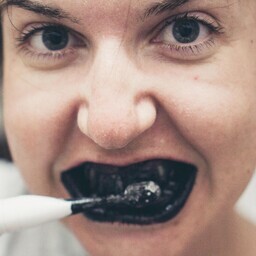
She also warns that charcoal toothpaste and baking soda used at home can damage the tooth surface: anything abrasive scratches it, stains then adhere faster and teeth become more sensitive. If necessary, a dentist can supply custom trays into which gel is placed. To actually change tooth colour, hydrogen peroxide or carbamide peroxide is needed.