Sweden Eases Mining Permits to Reduce Reliance on China for Rare Earths
Sweden's government announced plans to streamline mining permits for critical minerals, declaring it a national security priority to attract investment and reduce European dependence on China, which dominates global rare earth production.
On Thursday, the Swedish government unveiled a strategy to accelerate and simplify the permit process for mining critical metals and rare earth elements, citing national security interests. Energy Minister and Deputy Prime Minister Ebba Busch stated that Sweden must become a leading mining nation and that the current system is too slow. She noted that only 1% of global mining investment currently reaches Sweden. The move aims to counter the "systemic risk" of European industry's dependence on China, which accounts for roughly 70% of global rare earth mining and refining.
The new policy will make it easier for the state to allocate land for mining projects, which has been a point of tension with the indigenous Sami people, whose reindeer herding could be affected. The government is also considering establishing a state-owned investment company to support strategic mining projects. Busch emphasized that the changes could significantly contribute to Sweden's, the EU's, and NATO's defense capabilities.
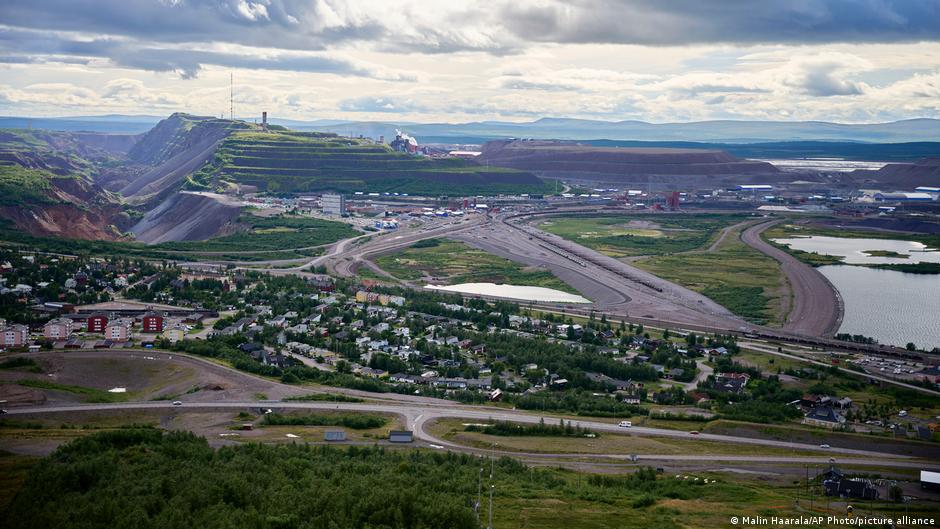
Sweden is already a major mining player, home to Europe's largest iron ore mine in Kiruna, which holds about 60% of the continent's known iron ore deposits and produces around 90% of its iron ore. The Kiruna mine has caused subsidence, leading to the relocation of parts of the town, including its iconic red church. Nearby, the Per Geijer deposit contains an estimated 1.2 billion tons of mineral resources, including 2.2 million tons of rare earth oxides. However, LKAB, the mining company, estimates that obtaining permits to excavate on Sami land could take up to 10 years.
Sweden hosts four of the 47 EU strategic projects aimed at reducing mineral dependence on China. The country's mining history dates back to the 10th century with the Falun copper mine, which once produced two-thirds of Europe's copper and is now a UNESCO World Heritage site.