Sweden extends border checks on EU countries for six months, citing Russian hybrid threats
Sweden's government will reinstate border controls on internal Schengen borders from 12 November to 11 May 2027. For the first time, it explicitly cites hybrid threats posed by Russia as the reason.
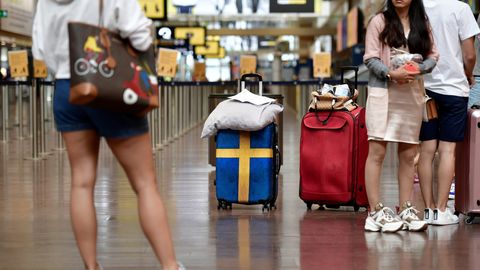
The Swedish government has announced that it will again carry out border checks with other European Union countries over the next six months, from 12 November to 11 May 2027. For the first time, Stockholm directly cites hybrid threats from Russia as the justification. The Schengen area is a group of European countries that normally have no checks on their internal borders.
In practice, this extends controls that are already in force. Earlier, Swedish authorities explained the need for them by pointing to a serious security situation, in particular cross-border crime linked to state structures and terrorism. The same kind of wording appeared in the announcements of 18 May 2026 and in two similar decisions in 2025, none of which mentioned Russia or hybrid threats originating from it.
The government's reasoning
The Swedish Ministry of Justice said in its statement that the decision rests on an assessment of serious threats to public order and internal security. The government says the assessment is based chiefly on the grave security situation created by Russia's full-scale invasion of Ukraine, which, according to the statement, has given rise to hybrid threats and to the movement of hostile individuals within the Schengen area.
Reinstating border checks is one of several measures needed to respond to threats to the country's internal security. It gives authorities the tools and conditions to identify arriving people who could endanger public order and security. Such decisions are taken in line with general EU law.
Other countries
Stockholm stressed that several other Schengen countries, namely France, Germany, Norway and Denmark, have also introduced border controls.