Sweden's PM Kristersson resigns after left-leaning bloc secures narrow election win
Sweden's Prime Minister Ulf Kristersson has resigned after left-leaning parties won a slim majority in the general election, opening the way for Social Democrat leader Magdalena Andersson to try to form a government.
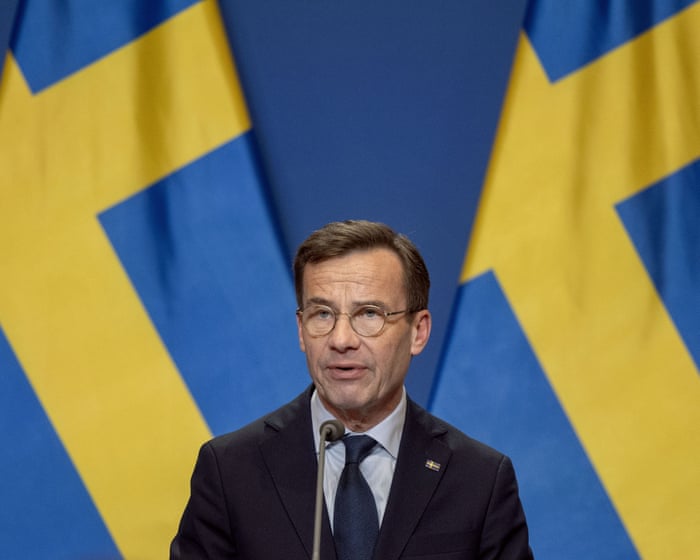
Sweden's centre-right prime minister, Ulf Kristersson, has resigned, opening the path for Social Democrats leader Magdalena Andersson to attempt to form a new government.
The final preliminary count from Sunday's election was confirmed on Thursday, giving the left-leaning opposition bloc 176 seats — a narrow three-seat majority over Kristersson's ruling Tidö coalition, which was backed by the far-right Sweden Democrats (SD). Only 50,359 votes separated the two blocs.
In her victory speech, Andersson said Swedes had voted for unity and a new direction for the country, naming the climate crisis, schools, healthcare, elderly care and immigration policy among her priorities.
Notably, the Sweden Democrats lost support in a general election for the first time since the party's founding, slipping from the country's second-largest party to third.
In his resignation letter, Kristersson said the speaker, Andreas Norlén, would now lead the process of forming a new government, beginning talks with representatives from each party to propose a new prime minister.
Difficult negotiations ahead
While the Social Democrats remain Sweden's largest party, they received record-low support in this election. Andersson now faces weeks of complex coalition talks with the Left, Centre and Green parties.
One of the toughest issues will be relations between the Centre and Left parties — the Centre party has ruled out governing alongside the Left, while the Left is demanding a role in government in exchange for cooperation. Other sticking points include a proposed billionaire tax, nuclear energy policy and taxation, with the Greens, Social Democrats and Left favouring tax increases while the Centre party wants cuts.
Minority governments and informal cooperation agreements are common in Swedish politics. The Social Democrats are expected to prioritise changes to immigration, integration and climate policy from the outgoing government, though much of that government's legacy is likely to remain given the Social Democrats' own rightward shift on immigration and crime in recent years.
/nginx/o/2026/08/20/17859323t1h5d2b.jpg)