Early Land Animals Skipped the Tadpole Phase
A new study suggests that the first tetrapods to colonize land over 300 million years ago developed directly, without a tadpole stage, challenging long-held assumptions about amphibian evolution.
Scientists have long assumed that early tetrapods—ancient vertebrates that began conquering land over 300 million years ago—developed like modern amphibians, starting as aquatic tadpoles and metamorphosing into terrestrial adults. However, a new study published in Science questions this assumption.
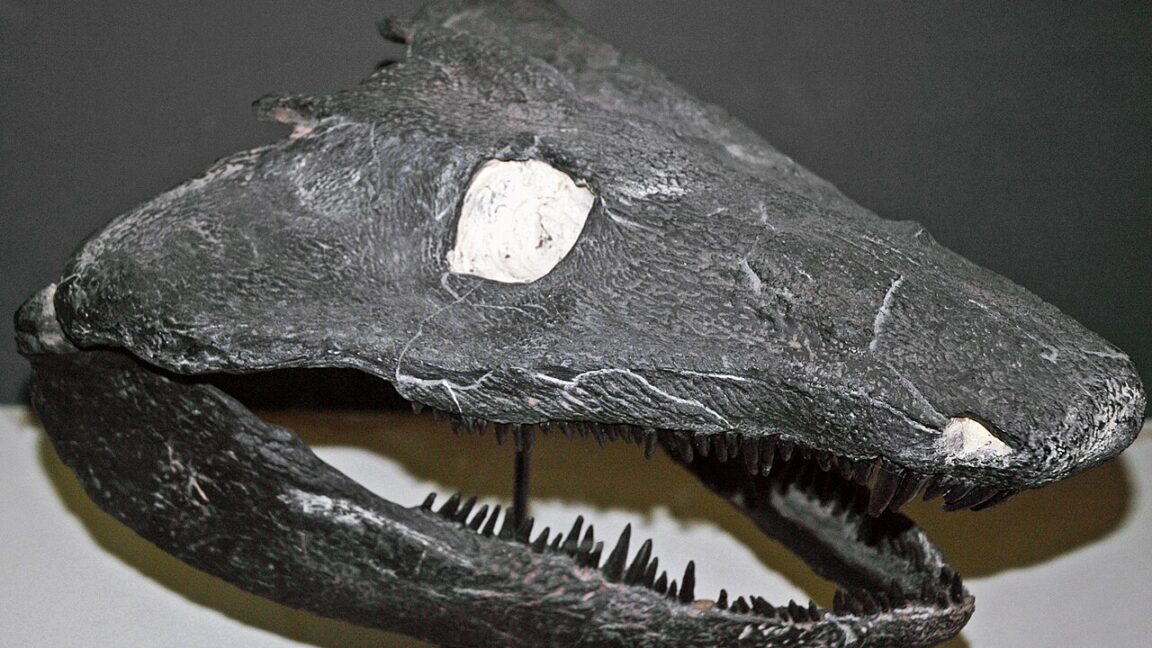
Researchers Jason Pardo and Arjan Mann from the Field Museum focused on embolomeres, an extinct group of large predators that lived about 300 million years ago. These animals resembled a cross between a crocodile and an eel, with large skulls full of sharp teeth and long, eel-like bodies. They had short, stocky limbs adapted for paddling but capable of brief land excursions.
The team examined an embolomere fossil designated FMNH PR 1082, which had been in the Field Museum's collections for decades. Using modern imaging techniques like electron microscopy, they realized it was a very young embolomere that died before its first meal. The juvenile looked like a miniature adult, lacking external gills and possessing an internal yolk sac, suggesting ancestral tetrapod eggs were large and nutrient-rich, like those of reptiles and birds.
Further analysis of other fossils, including a smaller embolomere hatchling and a juvenile Phlegethontia longissima, confirmed the absence of external gills. The researchers also re-examined early finned tetrapodomorphs called megalichthyids, which predated embolomeres by 20–30 million years, and found no evidence of a tadpole stage.
Pardo suggests that amphibian metamorphosis is not an ancient evolutionary stepping stone but a later innovation that helped modern amphibians cope with terrestrial life. Without a tadpole stage, the water-to-land transition was likely more challenging, as juveniles were tied to the same environment as adults and had weak limbs that hindered land movement.
The study challenges decades of assumptions about early tetrapod development and reshapes our understanding of how life moved from water to land.