In Alaska's capital Juneau, food arrives by water, air and, most often, community sharing
Juneau, Alaska's capital with 35,000 residents, can be reached only by water or air, so local growers, community networks and traditional food sharing are central to its food supply. The widely cited claim that Alaska imports 95% of its purchased food does not capture the food people harvest and share.
Juneau, the capital of the US state of Alaska, can be reached only by water or air, because the single road serving the city simply ends. Nearly all food reaching this city of 35,000 people arrives by ferry, barge or plane, which makes local growers and community sharing traditions an important supplement to imports.
Meghan Stangeland manages the Salt and Soil program of Ecotrust, a non-profit based in Portland, Oregon. It works as an online farmers' market and food hub. Because the capital has no weekly farmers' market, producers in the network get each order to Juneau however suits them: by barge, seaplane or other air transport.
What the 95% figure leaves out
Alaska food coverage often repeats that the state imports 95% of the product it purchases. According to KTOO, no one has traced that number to a verifiable source. Stangeland stresses that it refers to purchased food, not everything residents eat. By the state's most recent comprehensive estimate, from 2014, Alaskans harvested about 46 million pounds of wild food; in rural areas that is roughly 275 pounds per person a year.
Ricardo Worl, a Tlingit communications officer at Sealaska Heritage Institute, explains that in the villages of south-east Alaska food is shared by everyone, and that subsistence harvesting is a matter of survival, not only culture.
Limited local farming
Farming around Juneau is difficult: flat, non-marshy land is scarce, soil is acidic and the growing season lasts only from May to September. Joe Orsi, 67, a retired fishery research biologist, cultivates a third of an acre and says he earns about $20,000 a year. John Krapek's hydroponic business Juneau Greens has grown from 18 grow beds in 2017 to 100, and its 425 subscribers provide steady demand.
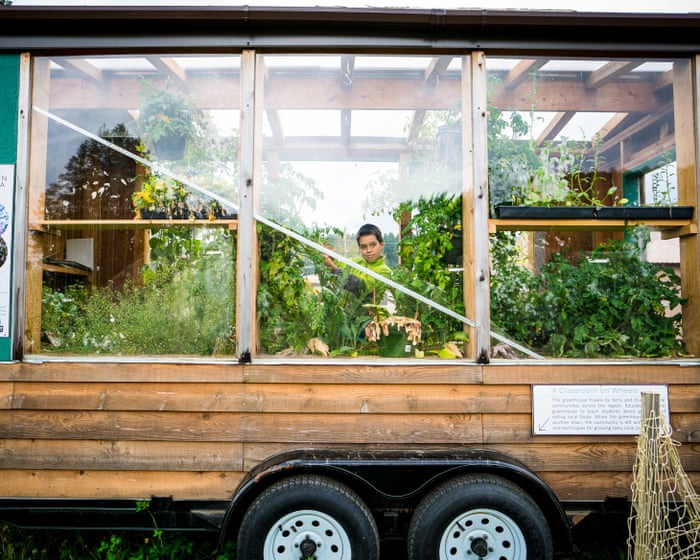
In 2019 Ecotrust created its own program, Healthy Foods = Healthy Families, to get local food to people who might not otherwise access or afford it. Its mobile greenhouse Moby has visited communities along the Alaska Marine Highway ferry route, and almost every one now has a permanent greenhouse or high tunnel.