Ardo Hansson: Affordability begins with economic growth
In a commentary for Estonian public broadcaster ERR, economist Ardo Hansson argues that wages and pensions in Estonia have outpaced consumer prices over four years, and that lasting purchasing power depends on productivity and economic growth.
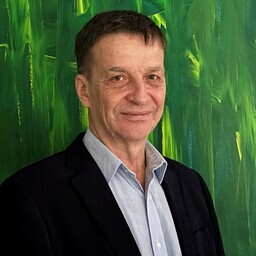
In Estonia, as elsewhere in Europe, economic growth has become less popular in some circles, even as concern about the cost of living grows. In a commentary for Estonian public broadcaster ERR, Ardo Hansson argues that the two issues are closely linked: affordability depends not only on prices but also on incomes and on the share of them that must go on food, housing and energy.
Prices and incomes over four years
The author recalls that 2022 and 2023 were exceptionally hard, as Russia used energy as a weapon against Europe, launched its full-scale war against Ukraine, and supply chains were disrupted, all of which pushed prices up sharply. However, comparing data for the second quarter of 2026 with figures from four years earlier, consumer prices in Estonia rose by 24.1 percent. According to Statistics Estonia, average gross monthly wages rose by 34.6 percent over the same period, median wages by 36 percent, and the wage level below which the lowest-paid 10 percent fall by 43.7 percent. The average old-age pension increased by 44.3 percent and the minimum wage by 44.6 percent.
Purchasing power linked to all of these income measures has therefore improved, with lower wages and pensions growing faster than average wages. Hansson stresses that this does not reflect everyone's situation: food and nonalcoholic beverages became 33 percent more expensive, transportation 18 percent and housing costs 15 percent.
Productivity as the foundation
The author argues that lasting prosperity cannot be created simply by paying higher wages and pensions, because without more value being created in the economy, inflation may consume the increase. That requires business investment in technology, new skills and more efficient work processes, as well as products customers in Estonia and abroad will pay more for. In his view, growth does not mean longer working hours or wasting resources, and environmental harm should be reduced without reducing the value the economy creates.
Hansson concludes that without productivity and economic growth it would be harder to raise living standards sustainably, and improving one person's situation would increasingly require taking something from someone else.