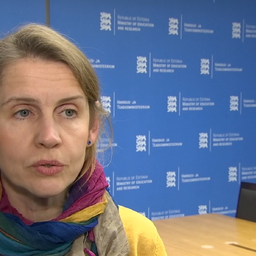
Arkady Popov: Mandatory health insurance must not become a burden for low-income people
Arkady Popov, board member of Tallinn Hospital, warns that proposed mandatory health insurance for all Estonian residents could heavily impact low-income individuals, while the idea overall is reasonable.

Estonia is continuing discussions on introducing universal mandatory health insurance. Health economics experts propose that residents who do not have income subject to social tax should pay insurance premiums themselves. If linked to the minimum wage, the monthly payment would be around €115. Non-payment could lead to debt to the state.
The initiative affects about 90,000 uninsured residents. According to experts, if at least half of them start paying, the Health Insurance Fund could receive an additional €60 million annually, partially covering the funding deficit.
Arkady Popov, a physician and board member of Tallinn Hospital, said on Radio 4 that the idea to expand the pool of payers did not arise by chance: the healthcare system has faced a serious funding shortage for years. "In recent years, we have encountered a significant healthcare financing deficit. We have to look for additional sources of funding. In such a situation, the idea itself seems reasonable, but it is very important to understand in which cases it will work and in which it will prove ineffective or even dangerous for a person," Popov said.
As an example, he cited wealthy entrepreneurs living on dividends who lack health insurance. According to him, financially well-off people without insurance regularly visit emergency departments. "A person arrives in an expensive car, well-dressed, just returned from a holiday abroad. He is uninsured, but when visiting the emergency department, he pays the same €20 per visit as an insured patient and receives full care," Popov noted.
At the same time, the doctor believes that uniform rules should not automatically apply to all residents. In his opinion, €115 a month is a negligible amount for a wealthy person, but for low-income people such a payment could be unaffordable. Popov warns that amid inflation and rising cost of living, additional mandatory expenses could worsen diet quality and living conditions, ultimately negatively affecting people's health.
Discussing long-term solutions, Popov noted that the current healthcare model based on social tax revenues is under increasing pressure due to demographic changes. In the long run, the state will either have to increase tax revenues or attract additional funds from the private sector. However, over-reliance on private health insurance carries risks. As an example, Popov cited Ireland, where the increased role of private medicine led to a drain of doctors from the public sector, rising medical service costs, and queues in public institutions. "There is no universal solution. If we want to maintain a solidarity-based healthcare system, as well as the quality and accessibility of medical care, in the future we will probably have to discuss changing the tax burden," he concluded.