Ašeradens: Rail Baltica won't be finished by 2030, real costs must be faced
New Unity's prime ministerial candidate Arvils Ašeradens says Latvia must assess Rail Baltica realistically and with reduced costs, since the project won't be completed by 2030. He calls for the Baltic states to agree on a cheaper, lower-speed version.
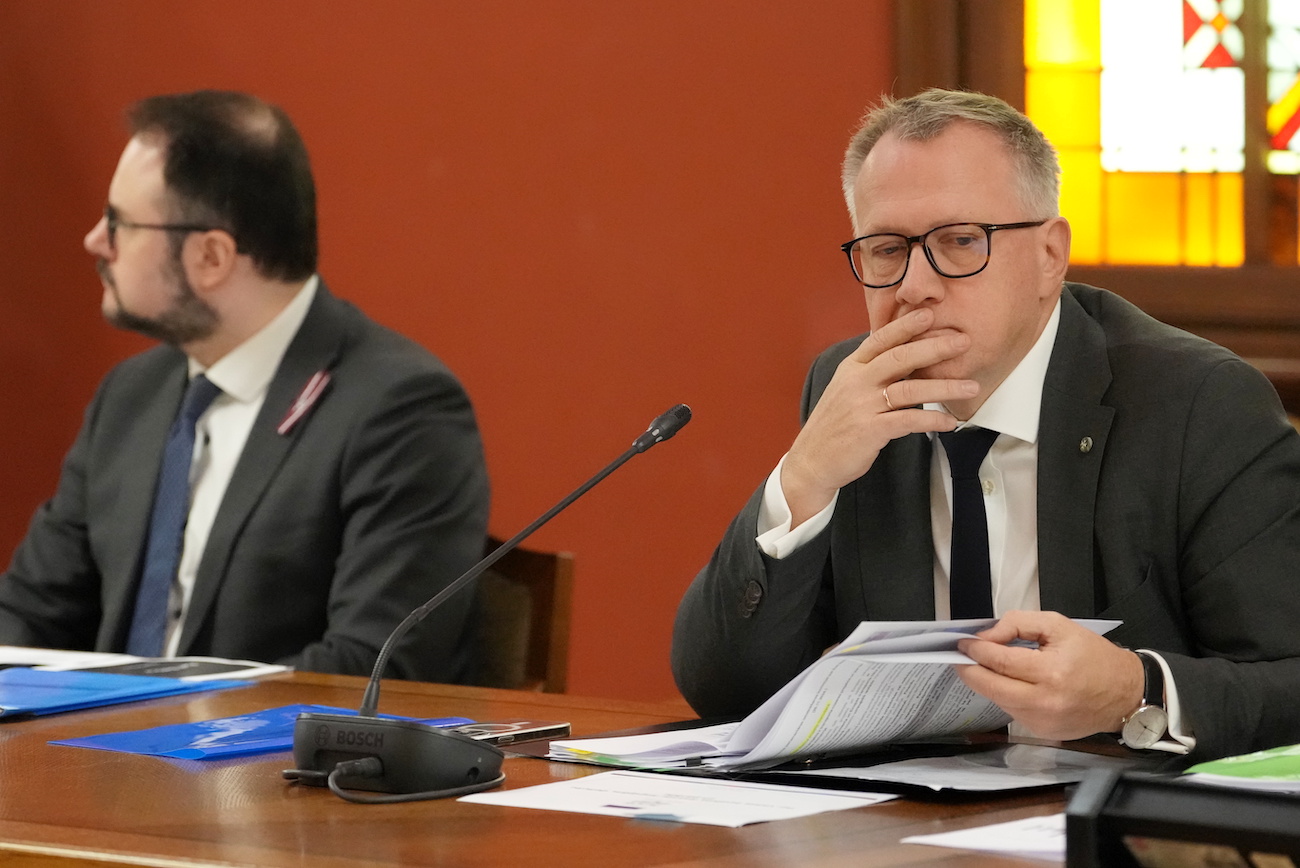
Former finance minister and New Unity prime ministerial candidate Arvils Ašeradens said in an interview with LETA's podcast that Latvia needs to drop its overly optimistic view of Rail Baltica and start assessing the project realistically. He stated it is already clear the project will not be completed by 2030.
Ašeradens called on Latvia, Estonia and Lithuania to agree on a financially achievable version of the project. One way to cut costs, he suggested, would be to revise the originally planned maximum train speed — in his view, 180 kilometers per hour could be a good solution for the Baltic railway, since higher speeds require more expensive infrastructure.
Discovering the scale of the cost problem
Ašeradens said he learned the scale of the project's financial troubles as finance minister after then-transport minister Jānis Vitenbergs told him the project needed an additional five billion euros. That, he said, made clear the situation was no longer good. He noted that the previously government-approved cost estimate for Latvia's share had been about 1.7 billion euros.
According to Ašeradens, ministers had not brought full information about the project's rising costs to the government. He suggested some former transport ministers, including Tālis Linkaits, may have concealed the real cost increases to keep the project moving forward, and suspected information may have been withheld later as well.
Supports continuing, but with conditions
While Latvia cannot afford Rail Baltica at its current cost level, Ašeradens does not support abandoning the project entirely, stressing that connecting to the European rail network serves Latvia's security and development interests. He sees two possible scenarios — halting the project or continuing it at significantly lower cost — and favors the latter.
Asked when residents might actually be able to use the new rail line, Ašeradens did not give a specific timeframe, saying a clearer answer could be given in about a year.
/nginx/o/2025/11/04/17255875t1h9b1b.jpg)