US lifts naval blockade; Iran's supreme leader says Trump made deal 'out of desperation'
The US Central Command confirmed the end of the naval blockade against Iran, following the president's order. Iran's supreme leader publicly commented on the deal for the first time, stating he approved it despite having a different view.
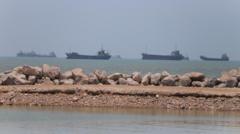
The US Central Command (CENTCOM) announced on X that it had lifted the naval blockade in accordance with the president's direction, though some US vessels would remain in the area. Shortly after, Iran's Supreme Leader Mojtaba Khamenei said he had approved the deal with the US despite having a 'different view', without elaborating. He stated he allowed it after assurances from Iran's President Masoud Pezeshkian that he would 'protect the rights of the Iranian nation'. Khamenei said President Trump 'out of desperation, used all kinds of leverage' to bring about the deal. He added that there would be 'in-person negotiations in the future' between Tehran and Washington, but that this 'will not mean acceptance of the enemy's position'. This is the first time Khamenei has responded to the agreement. He has not been seen in public since taking office in March after the killing of his father and predecessor, Ayatollah Ali Khamenei, in the 28 February US-Israeli strikes on Iran that sparked the regional war.
Trump did not directly respond to Khamenei's statement but posted on Truth Social that he expects a ceasefire to take effect 'on all fronts', including between Israel and Iran-backed Hezbollah in Lebanon, and that he expects Middle Eastern countries to 'maintain their commitment to allowing our negotiations' to proceed.
The US-Iran deal centers around 14 core points, including the reopening of the Strait of Hormuz, a requirement that Iran should never have a nuclear weapon, and a commitment to a $300 billion fund for the reconstruction and economic development of the country – although the US is not required to contribute. It also binds both sides to achieving a final deal in a maximum of 60 days, which could be extended with mutual consent.
The official signing ceremony had been set to take place in Switzerland on Friday. However, mediator Pakistan told the BBC it had been canceled because the deal had already been signed remotely. US and Iranian representatives are still expected to meet in Switzerland for further talks.
Speaking at a White House briefing, US Vice-President JD Vance said the deal had come into effect, triggering the 60-day period of further talks, and that he would likely head to Switzerland for 'technical negotiations'. He did not confirm when, adding that Iran was 'not an easy country to get out of' and that they were 'trying to figure out exactly when that was going to happen'.
Trump's decision to end the war with Iran has drawn criticism from some in the US, including Republicans dismayed by the terms – especially the provision of a reconstruction fund for Iran. Republican Senator Bill Cassidy described the agreement as the 'worst foreign policy blunder in decades'. He said 'Iran's nuclear ambitions were not curbed, and they have learned that threatening the Strait of Hormuz works'.
Vance defended the deal on Thursday, saying Iran will not receive money or sanctions relief unless it meets obligations set out in the agreement. He said the deal, known as the Memorandum of Understanding (MoU), requires Iran to destroy its stockpile of enriched uranium and show it will not fund proxy groups in the region.
Vance also criticized members of Israeli Prime Minister Benjamin Netanyahu's cabinet for criticizing the Iran deal, saying they should 'wake up and smell the reality'. He said if he were in the Israeli government cabinet, he might not be attacking the only powerful ally left. Vance named Israel's national security minister Itamar Ben Gvir and finance minister Bezalel Smotrich as critics. He said: 'I guess my response to them would be – what is your exact proposal? You're a country of nine million people. You can't just kill your way out of solving every single national security problem that you have.'
Netanyahu himself stressed the importance of maintaining close US-Israel ties on Thursday, saying Washington had stood 'shoulder to shoulder' with the country during the war with Iran. But both Israel and Hezbollah have carried out strikes against each other since the US-Iran agreement was announced, including strikes reported in Lebanon on Thursday that killed three people. Israel argues its conflict against Hezbollah is separate from its war on Iran. Hezbollah has also rejected the terms of the deal.
Vance told reporters that Israel would have to respect the peace process with Iran, which he said was good for them, stating that attacks in Beirut that kill civilians are 'not acceptable'.