U.S. Warns Russia Is Building a Nuclear Weapon for Space – But How to Prove a Warhead Is Inside a Satellite?
The U.S. claims Russia is developing a nuclear weapon for space deployment. Detecting a warhead on a satellite is extremely difficult. Physicist Areg Danagoulian proposes a method using natural cosmic particles to identify nuclear devices in orbit.
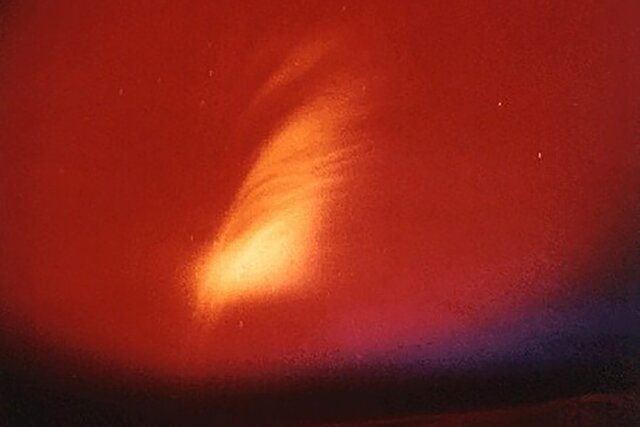
U.S. officials have expressed concern that Russia may be preparing a nuclear explosion in space, potentially to destroy satellite constellations aiding Ukraine. While a nuclear explosion in space is easy to detect, finding an unused warhead aboard a satellite is far more challenging.
Detecting nuclear weapons on Earth is already difficult. Weapons-grade uranium and plutonium emit low levels of radiation that become indistinguishable from natural background at 10–20 meters. Specialized equipment like high-precision gamma spectrometers can detect a warhead, but even they are not foolproof. In 2002, ABC News journalists smuggled depleted uranium into the U.S. past customs.
In space, the problems are magnified. A satellite's faint radiation is drowned by cosmic background. Moreover, the Outer Space Treaty prohibits nuclear weapons in orbit, but there is no verification mechanism.
Physicist Areg Danagoulian of MIT proposes an innovative solution: use natural cosmic particles as an "inspector." His method relies on high-energy protons from cosmic rays hitting uranium or plutonium nuclei, causing spallation and producing a characteristic neutron flux. If a suspicious satellite emits such a flux, it likely contains a nuclear weapon.
Danagoulian's concept involves a small inspector CubeSat (9U format) equipped with two plastic scintillator panels and diamond plates to distinguish neutrons from charged particles. To obtain reliable results, the inspector would need to stay within 4 km of the target for about a week. If the distance is reduced to 1 km, one hour suffices.
His calculations are based on data from the orbit of Russia's Kosmos-2553 satellite, which the U.S. accuses of testing nuclear weapon components. Danagoulian notes that close-approach maneuvers in space have already occurred, such as Russia's Luch satellite shadowing European spacecraft, without triggering a serious crisis. However, such activities cause political tension.