House Republicans resurrect Save America Act by attaching it to spending bill
House Republicans on Wednesday passed the controversial Save America Act, which restricts mail-in voting and imposes new voter ID requirements, by linking it to an unrelated spending bill. Senate Democrats vowed to block it again, raising the risk of a government shutdown.
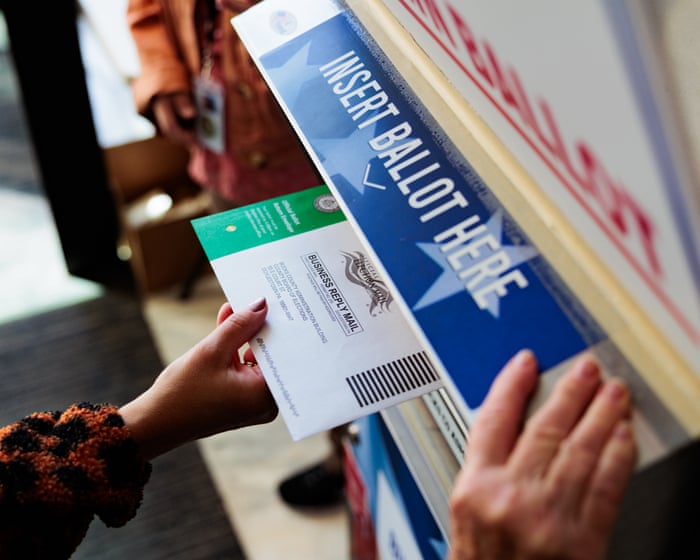
House Republicans on Wednesday made another attempt to fulfill Donald Trump's demand for new voting restrictions nationwide by linking the measure to an unrelated spending bill and passing both largely along party lines.
The effort is the latest by congressional Republicans to pass the Save America Act, which would ban mail-in ballots and impose new identification requirements on voters when they register and cast ballots. The Trump administration has cast the bill as necessary to prevent non-citizens from voting and combat election fraud, but voting rights advocates say there is no evidence of widespread election tampering and warn the bill could disenfranchise swaths of eligible voters ahead of November's midterm elections.
The House approved a version of the bill in February, but it has no path to passing the Senate, where top Democrats oppose it and can use the filibuster to halt its advancement. Rightwing House Republicans have nonetheless insisted that their leaders make the bill a priority, and Speaker Mike Johnson agreed to a plan to combine the Save America Act with a bill authorizing spending by the State Department and related agencies, which the House passed by a 217-209 vote on Wednesday afternoon.
Senate Majority Leader Chuck Schumer vowed to again block the measure, as his party did when Majority Leader John Thune earlier this year opened debate on the Save America Act under pressure from Trump and his allies. "I'll say it as many times as it takes: the Save America Act is dead on arrival here in the Senate," Schumer said ahead of the House vote. "I don't care how Republicans try to package their plan to resurrect the old ghost of Jim Crow – we will kill it."
Trump has repeatedly insisted that Congress's Republican majorities approve the Save America Act, going as far as to disrupt the legislative agenda to underscore the seriousness of his demands. He has tied its passage to the renewal of a foreign surveillance law that expired last month, and refused to sign a federal housing policy bill that was approved with bipartisan support in protest of the lack of progress on Save America. The housing measure became law last week without his signature.
Answering the president's call, conservative House lawmakers late last month effectively shut down the chamber's floor by opposing procedural motions that must pass before legislation can be voted on. They relented earlier this week, backing Johnson's plan to link Save America to appropriations measures, which authorize spending by federal agencies and usually pass with bipartisan support.
That process is set to be disrupted if Republicans press on with attaching the Save America Act to such legislation, raising the possibility of a government shutdown later this year. Anna Paulina Luna, a Florida Republican who led the blockade of the House floor, sought to shift blame to Thune if Save America fails again. "If John Thune strips it out in the Senate, that will be on him and the entire country should be watching what he does," Luna said. "His state party should censure him and/or he should be primaried if he wants to betray his constituents in this manner. That is the nature of politics."