US Treasury to buy back $6bn in government debt to ease bond market turmoil
Treasury Secretary Scott Bessent announced a $6bn buyback of US government bonds to calm a market sell-off driven by rising inflation and the war in Iran, though yields kept climbing despite the move.
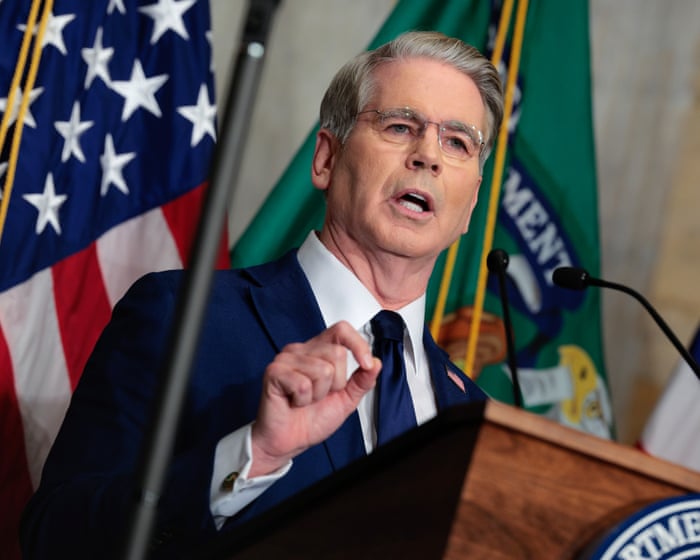
US Treasury Secretary Scott Bessent announced on Wednesday that the treasury will buy back $6bn worth of government debt in a bid to ease pressure on the bond market. Investors have recently been pulling away from US treasuries, long considered among the safest investment vehicles, amid rising inflation and uncertainty stemming from the war in Iran.
Treasury yields have been climbing steadily, with the 30-year bond yield reaching about 5.2% — its highest level since the 2008 financial crisis. Bessent had already announced on 19 August that the treasury would at least double its usual buyback operations, aiming to reduce the supply of bonds on the market and push yields down. Even after Wednesday's announcement of the specific $6bn operation, yields continued rising.
In August, US government debt surpassed $40tn for the first time in history — double what it was just a decade ago. Higher yields translate into higher borrowing costs for consumers as well, since rates on mortgages, student loans and car loans are frequently linked to the bond market.
Pressure builds on the Federal Reserve
The situation adds to pressure on the Federal Reserve to address inflation, which has been fueled by the war in Iran. The annualized inflation rate hit a three-year high in May before easing to 3.4% in July — still 0.7 percentage points higher than a year earlier, driven largely by higher energy prices. On Wednesday, Brent crude oil prices rose above $100 a barrel for the first time since July, as conflict in the Middle East continues to escalate.
The Fed could raise interest rates to curb inflation, though doing so risks angering the White House. Last week, Donald Trump urged the Fed to "get smart" and cut rates, writing on social media that a strong country means a lower interest rate. That leaves Fed Chair Kevin Warsh, who took office in May, in a difficult position, having to choose between managing inflation and facing presidential criticism. In a closely watched speech at the Fed's Jackson Hole symposium in August, Warsh affirmed that it is the Fed's job to deliver stable prices, but stopped short of signaling whether rate hikes were imminent.