US report warns electronic shelf labels could cost jobs and raise grocery prices
A report from the AFL-CIO Tech Institute warns that widespread adoption of electronic shelf labels in US grocery stores could threaten tens of thousands of jobs and push food prices even higher. The authors are calling for the technology to be banned.
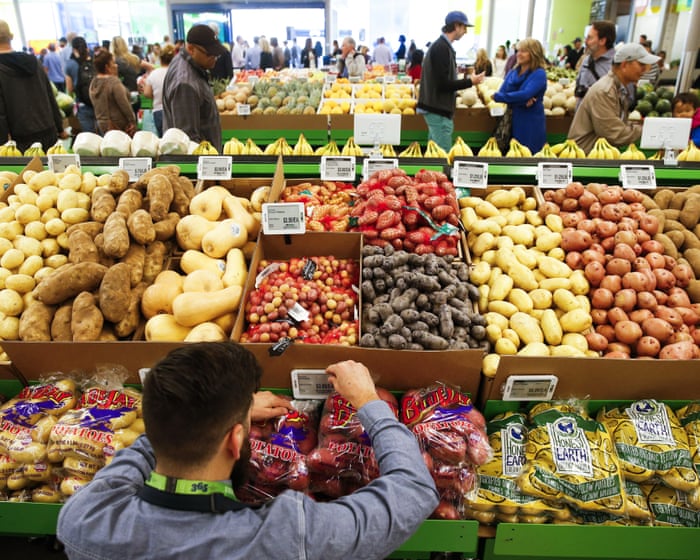
The AFL-CIO Tech Institute released a policy brief on Tuesday warning of the potential fallout from the widespread rollout of electronic shelf labels in American grocery stores. Based on an analysis of manufacturers' own marketing materials, the report estimates that universal adoption could cost workers between $1.6bn and $6.9bn in lost wages annually and affect somewhere between 44,223 and 191,633 jobs.
The brief, titled "Priced Out, Pushed Out," calls for a ban on electronic shelf labels to protect both consumers and workers. Manufacturers, meanwhile, market the labels as a way to cut labor costs, boost profits, and gather large amounts of personal data on shoppers.
According to the report's co-author Sunny Glottmann, the labels rely on the same algorithmic pricing systems already used by online retailers to adjust prices based on demand or even individual customer data. He warned that the infrastructure created by electronic labels would make rapid, large-scale price changes far easier to implement, a troubling prospect for consumers already struggling with grocery costs, which have risen 33% over the past seven years, outpacing both inflation and wage growth.
States move to restrict the technology
Several US states have already begun legislating against this kind of "surveillance pricing." Maryland became the first state to ban the practice in April, followed by Connecticut in June and New Jersey in July.
Lauren McFerran, the institute's executive director and former chair of the National Labor Relations Board, said the labels allow prices to be changed instantly, squeezing both shoppers' wallets and workers' paychecks. A May survey by the union UFCW found that 68% of Americans believe surveillance pricing will drive up grocery costs, while 67% would support banning digital price tags.
UFCW's Ademola Oyefeso explained that job losses tend to happen gradually, with full-time workers shifted to part-time hours before losing their jobs altogether. He noted that paper labels have served reliably for more than a century, while digital systems risk turning grocery shopping into something resembling volatile airline ticket pricing.


/nginx/o/2026/09/08/17905084t1h238a.jpg)