Burnham plans to bring water and energy under public control
Andy Burnham, the Greater Manchester mayor and potential future prime minister, aims to nationalise water and energy utilities over a decade to improve services and cut bills, but critics warn of huge costs to taxpayers.
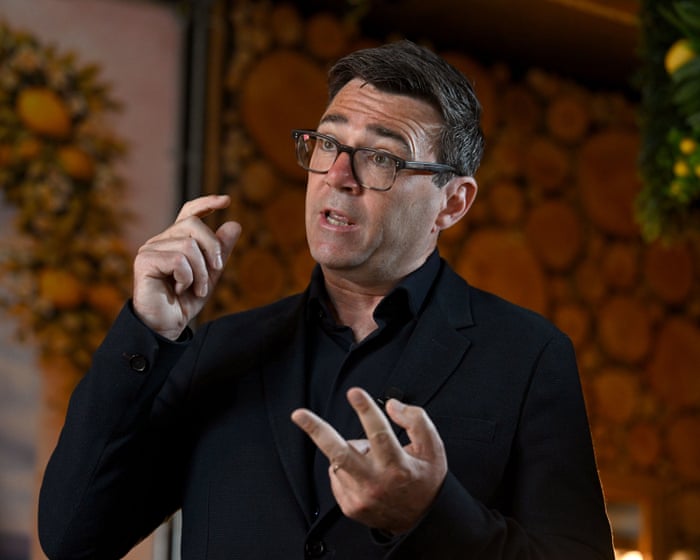
According to sources close to Greater Manchester mayor Andy Burnham, a decade-long project to bring water and energy into public control will be at the heart of his agenda if he becomes prime minister. Several close allies have indicated that Burnham wants to take over broad swathes of UK utilities to improve performance and potentially reduce bills for consumers.
The move would constitute one of the biggest transfers of ownership of British industry since the privatisations of the 1980s, but could also leave the public on the hook for billions of pounds' worth of infrastructure upgrades and running costs. One Burnham ally said: "When Andy says he wants the public to have control over 'the essentials of life', we should believe him. He is completely serious." Burnham himself has stated he wants to see "the essentials of life being run primarily for the public interest, not for the private interests," but has not spelled out exactly what that would mean on a national scale.
With Labour figures increasingly confident of victory in next week's Makerfield byelection, senior Burnham allies are now beginning to turn their attention to how to turn his political vision into concrete policies. While the mayor spends his time knocking on doors, a small group of people close to him have been collating ideas for government. Those feeding in ideas include Josh Simons, the outgoing Makerfield MP, Miatta Fahnbulleh, the former energy minister, John Wrathmell, Labour's former head of economic policy, JP Spencer, a devolution expert, and Tom Whitney, an adviser to the transport secretary.
At the heart of the agenda is a proposal to bring utilities back under public control, starting with the stricken Thames Water. Burnham told the Guardian last week: "Public ownership is absolutely an option. I would say for Thames Water, that is what should be done." His allies want the government to take the company into special administration rather than accepting a creditor deal that would write off up to £1bn in environmental fines. After that, a Burnham government is likely to take over water companies as they either fail or their franchises come up for renewal. The model for this would be the government initiative with the railways, which are being taken under public ownership via a plan first launched by Louise Haigh.
Over about 10 years, they claim, the entire sector could be put in public control. They argue the British sector should be modelled on utility companies in Berlin or Paris, where water services are run by independent organisations but with the majority of shares held by the municipal government, giving workers and residents board representation. Such a structure could give political leaders the power to push for bill reductions – though doing so could compromise repair and rebuilding programmes which many experts say are desperately needed.
Meanwhile, parts of the energy sector are also likely to be transferred into public ownership under plans being drawn up by those close to Burnham. They would include grid operations as currently carried out by National Grid and distribution, which is done by smaller regional companies. However, it is unlikely to include taking over power generation or selling electricity to consumers, which would remain in private hands.
Critics say such plans would come at a heavy price to the taxpayer, something Burnham can ill afford given he has promised to stick to the government's existing borrowing rules and not to raise income tax, VAT or national insurance. He has also said he would consider cutting some employers' national insurance contributions, and proposed a cut to business rates for pubs and small businesses. Burnham has already had to backtrack over one policy in recent days, having pledged to support the Waspi women before clarifying he would not back paying them compensation.
Should he become prime minister, he would also face immediate calls to raise the defence budget after the row over the defence investment plan that led to John Healey's resignation as defence secretary this week. Some close to the mayor also want him to announce a package of measures to reduce the cost of living, including a one-year freeze on private rents, a cap on bus fares, and the removal of green levies from electricity bills (to be paid for by taxes). Combining all three proposals would reduce inflation by 0.6 percentage points, according to its backers, and could be paid for in part by increasing capital gains tax as advocated by Wes Streeting.