Blue Origin Developing a More Powerful New Glenn Engine at a Quarter of the Cost
US space company Blue Origin announced two upgrades to its New Glenn rocket: a new first-stage engine called Northstar and a hydrogen-oxygen third stage, GS3. The aim is to cut manufacturing costs and raise payload capacity to geostationary orbit and the Moon.
US space company Blue Origin announced two significant upgrades to its New Glenn heavy-lift rocket on Thursday at Kennedy Space Center in Florida. The changes are meant to lower the cost of building the vehicle and to increase how much payload it can deliver to geostationary orbit and the Moon. In the long term, the company wants New Glenn to be able to launch more than 1,000 times a year.
The announcement was made by Dave Limp, Blue Origin's chief executive officer, at the UP.Summit conference held at the Shuttle Landing Facility. He said demand for launches has never been higher.
A new engine, Northstar
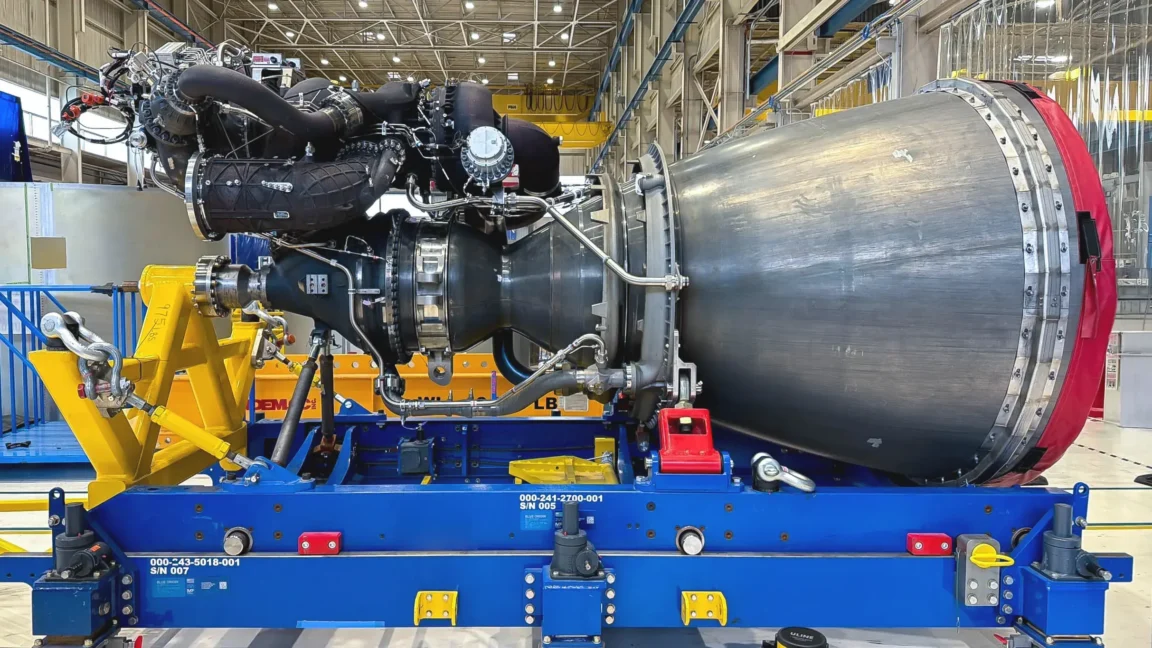
Blue Origin has already started a test-firing campaign for Northstar, an engine that will eventually replace the BE-4 powering New Glenn's first stage. According to Limp, Northstar is a simplified but more powerful version of the BE-4: it has half as many parts, 30 percent less mass, and about 65 percent of it can be 3D-printed.
The company believes it can build the new engine for 25 percent of the cost of a BE-4, and eventually assemble each engine in less than a day. The BE-4 currently in use produces 640,000 pounds of thrust, while Northstar will start at 715,000 pounds. Like the BE-4, Northstar burns methane and liquid oxygen, using an oxygen-rich staged combustion cycle and a single-shaft turbopump design.
Third stage GS3
Separately, the company said it is developing a hydrogen-oxygen third stage, GS3, to give the rocket an extra boost.
Limp stressed that BE-4 production will continue for United Launch Alliance, which uses two of these engines on its Vulcan rocket.