Bosnians cast ballots in election overshadowed by pro-Russian politician and ethnic strain
Bosnia and Herzegovina held a general election Sunday dominated by pro-Russian politician Milorad Dodik, who is not on the ballot but has stoked ethnic tensions, while many voters focused on everyday struggles.
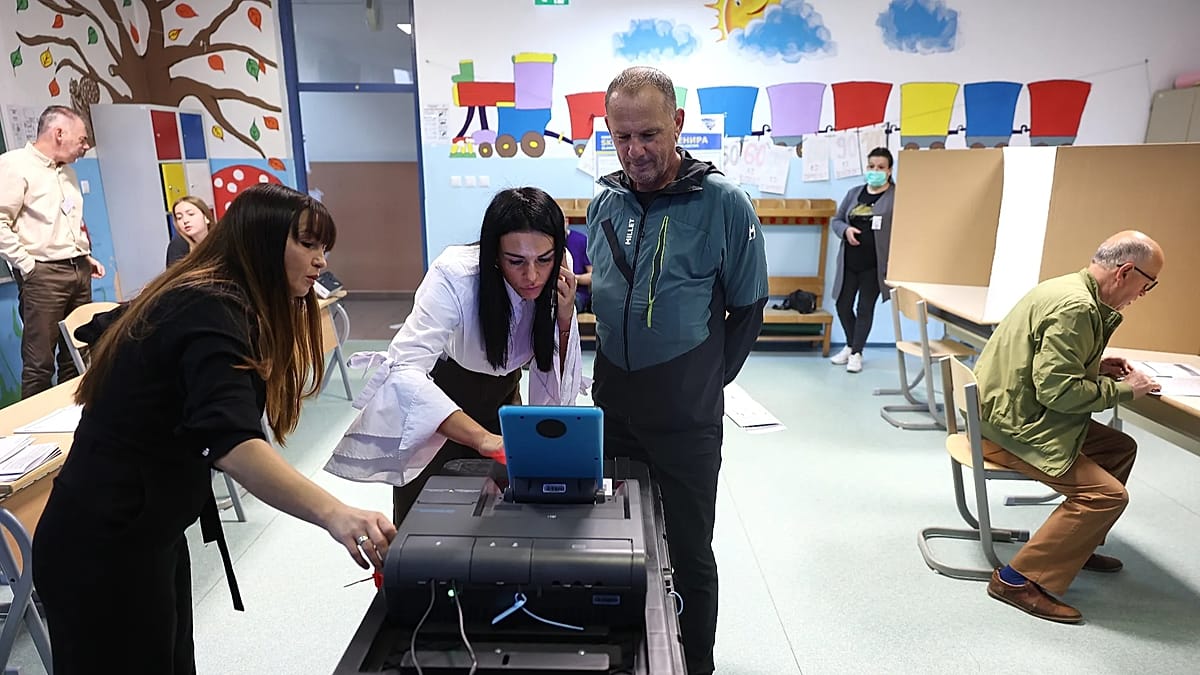
Polling stations opened Sunday across Bosnia and Herzegovina as roughly 3.4 million eligible voters selected members of the country's multi-ethnic presidency, national lawmakers, and leaders for its two entities — the Muslim-majority Federation and the Serb-dominated Republika Srpska. While many citizens said they care most about everyday hardships, the campaign has been overshadowed by renewed ethnic tension.
At the center of that tension is Milorad Dodik, the former president of Republika Srpska, who is barred from holding office after being convicted of defying the international envoy overseeing Bosnia's 1995 peace settlement. Despite his name not appearing on any ballot, Dodik — fresh from a meeting with Russian President Vladimir Putin in Moscow — remained a dominant presence in the race. At a rally in Banja Luka on Friday, attended by Russia's ambassador to Bosnia, Igor Khalabukov, Dodik declared Bosnia a "dead" and "impossible" country.
Analyst Dragan Bursac said Dodik, absent from a ballot for the first time in nearly three decades, nonetheless dominates media coverage across the entire country, turning his political ban into a campaigning advantage.
Bosnia, among Europe's poorest nations, is still recovering from the 1992-95 war that killed more than 100,000 people and displaced millions after Bosnian Serbs took up arms against the country's declared independence. Its bid to join the European Union remains stalled amid persistent political division.
Tensions were further inflamed by a public tribute paid by Serbia and Bosnian Serbs to convicted war criminal Ratko Mladic, who died in August while serving a life sentence for genocide in Srebrenica. Senior Bosnian Serb officials attended his funeral in Belgrade, drawing sharp criticism from the EU and Bosniak politicians.
For the first time, authorities used electronic voter identification and ballot scanning to curb the kind of irregularities that have clouded past elections. Still, many voters in cities like Sarajevo and Mostar expressed frustration that longtime politicians use nationalist rhetoric to avoid confronting poverty, poor governance and the exodus of young people from the country. Polls were due to close at 7pm local time.