Expensive missiles, cheap drones: how Lithuania defends its airspace
Last week NATO fighter jets twice failed to shoot down a stray drone over Lithuania, prompting debate over using missiles worth hundreds of thousands of euros against cheap drones. Lithuania aims to have an integrated counter-drone system by the end of 2027.
Last week, NATO fighter jets made two unsuccessful attempts to shoot down a stray unmanned aircraft in Lithuanian airspace. The incident has prompted a debate in Lithuania over whether it makes sense to use missiles costing hundreds of thousands of euros against comparatively cheap drones.
The drone is suspected to be Ukrainian. It flew into Lithuania from Belarus, briefly crossed into Poland and then returned to Lithuanian airspace. NATO jets spotted it over Kaunas, Lithuania's second-largest city, but did not fire because it was above an urban area where falling debris could cause damage, said Rear Adm. Giedrius Premeneckas, head of the Lithuanian military's Defence Staff.
Two later attempts to neutralise it failed. Debris from one missile fell in the Biržai district, while the other apparently did not fire. Army commander Raimundas Vaikšnoras said the aircraft landed safely with the missile and that the country carrying out the air policing mission must now determine what happened. Italy and Belgium currently run NATO's air policing in Lithuania.
The costs
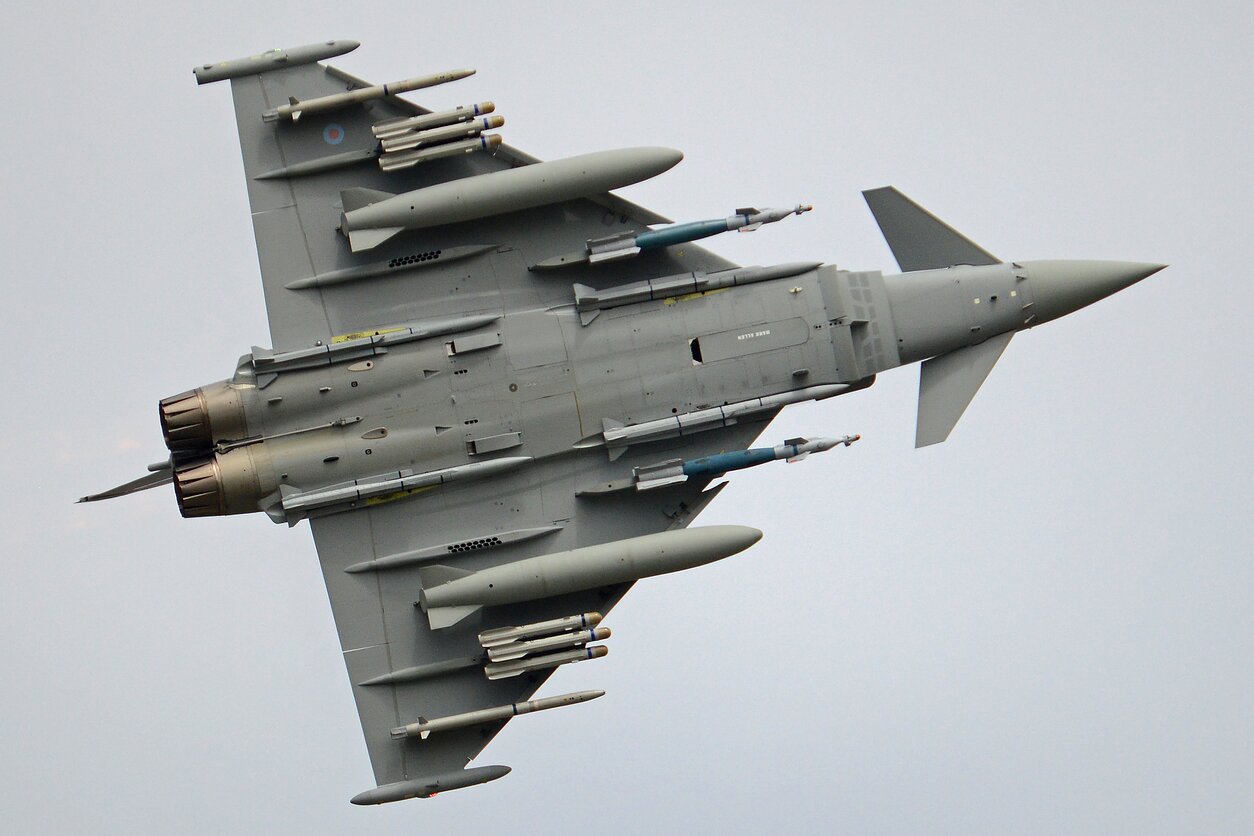
Retired Maj. Darius Antanaitis told LRT that Italian pilots flying Eurofighter Typhoon jets were likely responsible. These aircraft can carry short-range missiles such as the IRIS-T and AIM-9. An IRIS-T costs about 400,000 euros, while an AIM-9 Sidewinder costs between 500,000 and 900,000 euros. He estimated a Typhoon flight hour at about 50,000 euros, excluding ground crews and maintenance. Defence Minister Robertas Kaunas said a missile launch costs several hundred thousand euros, not millions. Participants in the mission currently bear the costs, while Lithuania is seeking an agreement to share them.
Antanaitis argued that comparing missile prices with drone prices ignores the potential damage a drone could cause and the military's duty to protect the population. Arūnas Kumpis, a drone operator and volunteer who fought in Ukraine, warned that Lithuania has limited stocks of missiles meant for more dangerous targets. He suggested electronic warfare equipment and interceptor drones, but said Lithuania lacks an advanced system for tracking and classifying drones.
Counter-drone system
Kaunas said Lithuania started building an integrated counter-drone defence this year, combining data from radars, acoustic sensors, cameras and electronic intelligence. It is expected to be operational by the end of 2027. Three or four companies have been shortlisted for procurement; the minister hopes to sign a contract by the end of this year, with prototypes ready for military testing in March or April 2027.