David Hockney’s Return to Yorkshire Triggered a Glorious Reawakening
Artist David Hockney’s later works, focusing on nature in Yorkshire and Normandy, combine technology and observation, earning acclaim in exhibitions.
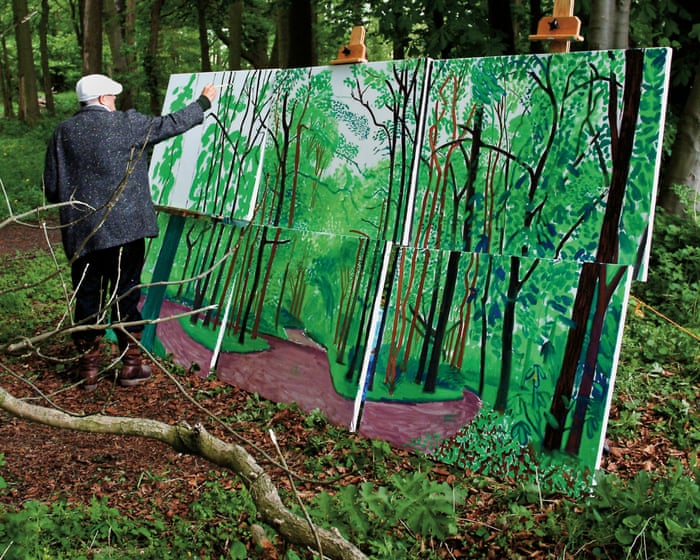
In spring, the Fondation Louis Vuitton in Paris hosted the exhibition “David Hockney 25,” covering the artist’s career but emphasizing his 21st-century work. Hockney, once famous for swimming pools and sexy portraits, had shifted to landscapes – hay bales, ponds, and woodlands in Yorkshire. The show transitioned from his early Californian and London pieces to early 2000s Yorkshire fields with emerald hedges and purple trees.
Living in Bridlington, Yorkshire, in the 2000s, Hockney painted en plein air like French Impressionists, repainting his home in bright California colors and using a tiny bedroom as a studio. He stopped designing for ballet and opera due to hearing loss but continued experimenting with technology, including the iPad.
During the pandemic, living in Normandy, he created iPad drawings of his garden and emailed them to spread cheer. He depicted spring – trees swaying in the wind, raindrops on ponds – as evidence of hope and happiness in a locked-down world. During this time, he revealed his relationship with assistant Jean-Pierre Gonçalves de Lima, which inspired his late works.
Though critics note that Hockney’s 1960s works like “A Bigger Splash” will define his legacy, his late nature-observing art earned acclaim. In Paris and a recent Serpentine Gallery show in London, Hockney proved that simple observation and drawing are democratic and universal art. He died as an art world icon, leaving a last kiss to the world.


