Twenty years on, Pluto's demotion still divides scientists
Two decades after the International Astronomical Union reclassified Pluto as a dwarf planet, the debate over whether the 2006 decision was a mistake remains unresolved among scientists and the public. Critics argue the IAU's definition is scientifically unworkable and politically driven.
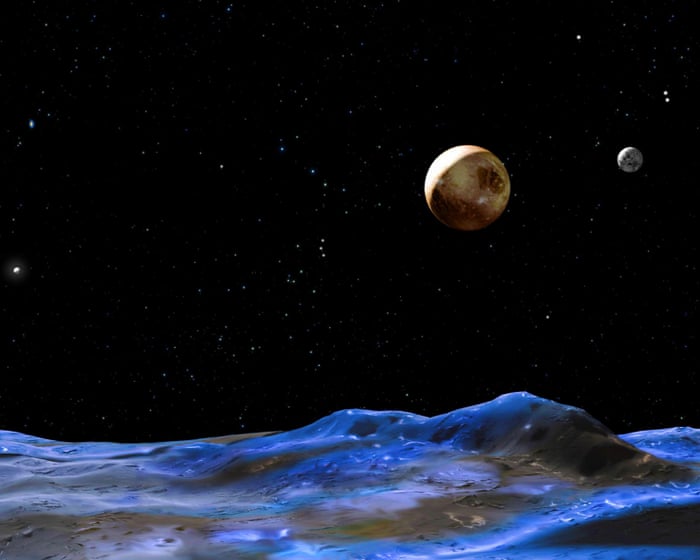
In August 2006, the International Astronomical Union (IAU) voted to strip Pluto of its status as a major planet, reducing the solar system's roster from nine planets to eight. Twenty years later, opinions on the decision remain sharply divided, with some scientists arguing the move should never have happened.
The vote followed the 2005 discovery of Eris, a distant body in the Kuiper Belt beyond Neptune, roughly comparable in size to Pluto. If Pluto counted as a planet, the reasoning went, so should Eris — and other similarly sized objects such as Haumea, Makemake and Sedna, potentially pushing the planet count into the hundreds.
To settle the matter, the IAU adopted a three-part definition: a planet must orbit the sun, have enough mass to form a round shape, and have gravitationally cleared its orbital neighbourhood. Pluto failed the third criterion and was reclassified as a dwarf planet.
That final requirement has proven the most contentious, since a body's ability to clear its neighbourhood depends heavily on its location rather than its intrinsic properties. Critics, including planetary scientist Philip Metzger of the University of Central Florida, argue this makes the IAU's definition effectively useless for scientific purposes.
The dispute has split researchers into two broad camps: the "geophysical" camp, which weighs a body's physical characteristics, and "dynamicists", who focus on orbital position. When Nasa's New Horizons spacecraft flew past Pluto in 2015, revealing mountains and signs of recent geological activity, geophysical-camp scientists pointed to the findings as further evidence Pluto deserved planetary status.
Astronomer Mike Brown, who led the team that discovered Eris, counters that a purely geophysical standard would also qualify Earth's moon as a planet, since it is larger than Pluto and geologically complex.
Advocacy for reinstating Pluto has been concentrated largely in the United States, and has recently gained political attention, including support from a Nasa administrator. Even so, some scientists caution that revisiting the vote now would be counterproductive, since positions on both sides have become deeply entrenched.