Ebola crisis exposes gap in treatment access for children
In the Democratic Republic of Congo's Ebola outbreak, mortality among children under five tops 60%, with experts saying young patients are often excluded from trials of new drugs. Aid group Doctors Without Borders is calling for children to be included in research at the same pace as adults.
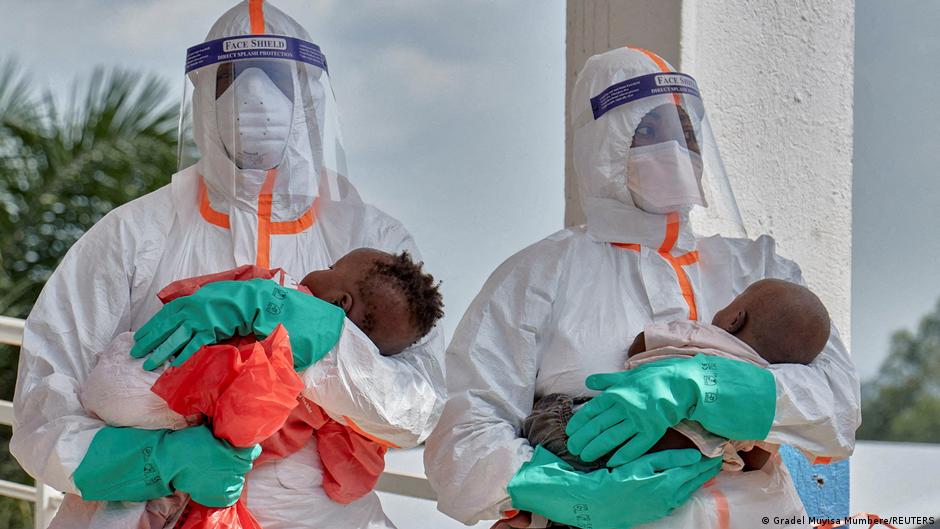
More than 3,000 people have died since the current Ebola outbreak began in the Democratic Republic of Congo in mid-May. Roughly half of those infected are expected to die, but the mortality rate among children under five exceeds 60%, according to a commentary published by Doctors Without Borders in The Lancet. The group says this is often due less to the disease itself than to a shortage of suitable medication and guidance on treating young patients.
Central to the issue is the EBO-PEP study, launched in July, which examines an experimental antiviral called obeldesivir aimed at protecting people exposed to the Bundibugyo strain of Ebola driving the current outbreak. Children under roughly 30 kilograms and around age 12 or younger were initially excluded, though protocols may soon expand to include children over 20 kilograms. Those under 20 kilograms have access only to an alternative, remdesivir, given intravenously — but a 10-day infusion course is difficult to administer during an outbreak, particularly for young children.
Pediatrician Neal Russell, who consults for Doctors Without Borders, explained that young children face heightened risk partly due to weaker immune systems and the greater difficulty of diagnosing them, since early symptoms mimic other illnesses and children struggle to describe their symptoms. Children also often cannot be accompanied by parents or caregivers in treatment centers, complicating recovery, and require closer monitoring from specially trained staff.
In May, an American doctor was treated at Berlin's Charité hospital after contracting Ebola while caring for patients, and his family, including four children, received an experimental antibody drug called MBP134 as a preventive measure. Doctor Han Ngoc Le said the family stayed healthy with no apparent side effects, though such a small case cannot be generalized. She noted it was still valuable to see the drug well tolerated in children under 12, including a one-year-old.
Experts say children cannot be treated as "small adults" medically, since their metabolism and drug responses differ, requiring separate studies and dosing. Marc Biot of Doctors Without Borders said pediatric research is often deprioritized because focusing solely on adults is faster and cheaper. Similar gaps have been observed with mpox, HIV, tuberculosis and COVID-19, and experts argue children and pregnant women should be included in trials from the start rather than added later.


