European Commission Wants to Greatly Expand Frontex Powers and Triple Its Border Staff
On 27 October the European Commission proposed expanding the powers of Frontex, the EU border and coast guard agency, and raising its standing corps to 30,000 by 2041. The agency would become the EU's main operational body for returning migrants.
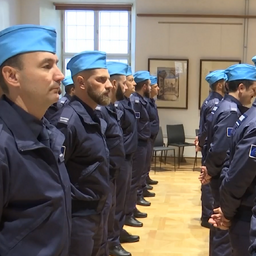
The European Commission on Tuesday, 27 October, proposed significantly expanding the powers of Frontex, the European Border and Coast Guard Agency. The agency helps EU countries control external borders and organise the removal from the bloc of people who have no right to stay. Deutsche Welle reported the details.
Under the proposal, Frontex's standing corps should reach the 10,000 staff already envisaged by current rules by 2027 and grow to 30,000 by 2041. The agency would also become the EU's main operational body for migrant returns. Magnus Brunner, the European commissioner for internal affairs and migration, said: "We ourselves must decide who can enter the EU, who can stay, and who must leave the European Union."
What would change
National authorities would still make deportation decisions and remain responsible for the related operations. Frontex would not be given powers to search for people subject to return on its own. At the request of EU states, it could help organise voluntary and forced returns, including flights and logistics. It could also help send migrants back not only from the EU but from other countries, for example from a transit country to the country of origin. Such operations would require a formal agreement between the EU and the country concerned, the consent of the European Parliament, and respect for the principle of non-refoulement, which bans sending people to places where they face persecution or cruel treatment.
According to the Commission, of every 100 people ordered to leave the EU, only 32–33 actually do so. Frontex is involved in almost half of completed returns: in 2025, 63,500 people were sent from the EU with the agency's support, or 43% of all migrants actually returned.
Rapid response and disinformation
The Commission also proposes creating rapid reaction forces within Frontex. At any EU state's request, they could reach its border within a day if it faces a sudden surge in migrant numbers or another crisis. Brunner said Frontex should be able to be on the ground within hours, not weeks.
Brussels said the reform drew on the migration crisis in Spain's enclave of Ceuta in summer 2026. Before the mass arrival of migrants, misleading information about a Spanish court ruling spread on social media. Frontex is to get a centre monitoring publicly available social media content, which would identify disinformation campaigns and warn EU states. It would not be able to delete such posts itself.
EU countries would also have to digitise return procedures and make their systems compatible. A single EU-wide database is not planned.
Who is affected
The rules could apply to citizens of any non-EU country, including Russians and Belarusians, if they have no legal right to remain and an EU member state's authorities have decided they must leave. Holders of valid residence permits or other legal status are not affected. Asylum seekers cannot be returned before their applications are decided. Ukrainians under temporary protection are also exempt.
The proposals must now be agreed by the European Parliament and the Council of the EU.