Economists: Latvia's next government will have to choose between spending cuts and tax hikes
In an election-night discussion, economists warned that the incoming government will face budget deficit pressures within the first year, with tougher fiscal choices expected a few years down the line. They cautioned that trimming bureaucracy alone won't solve the bigger financial problems.
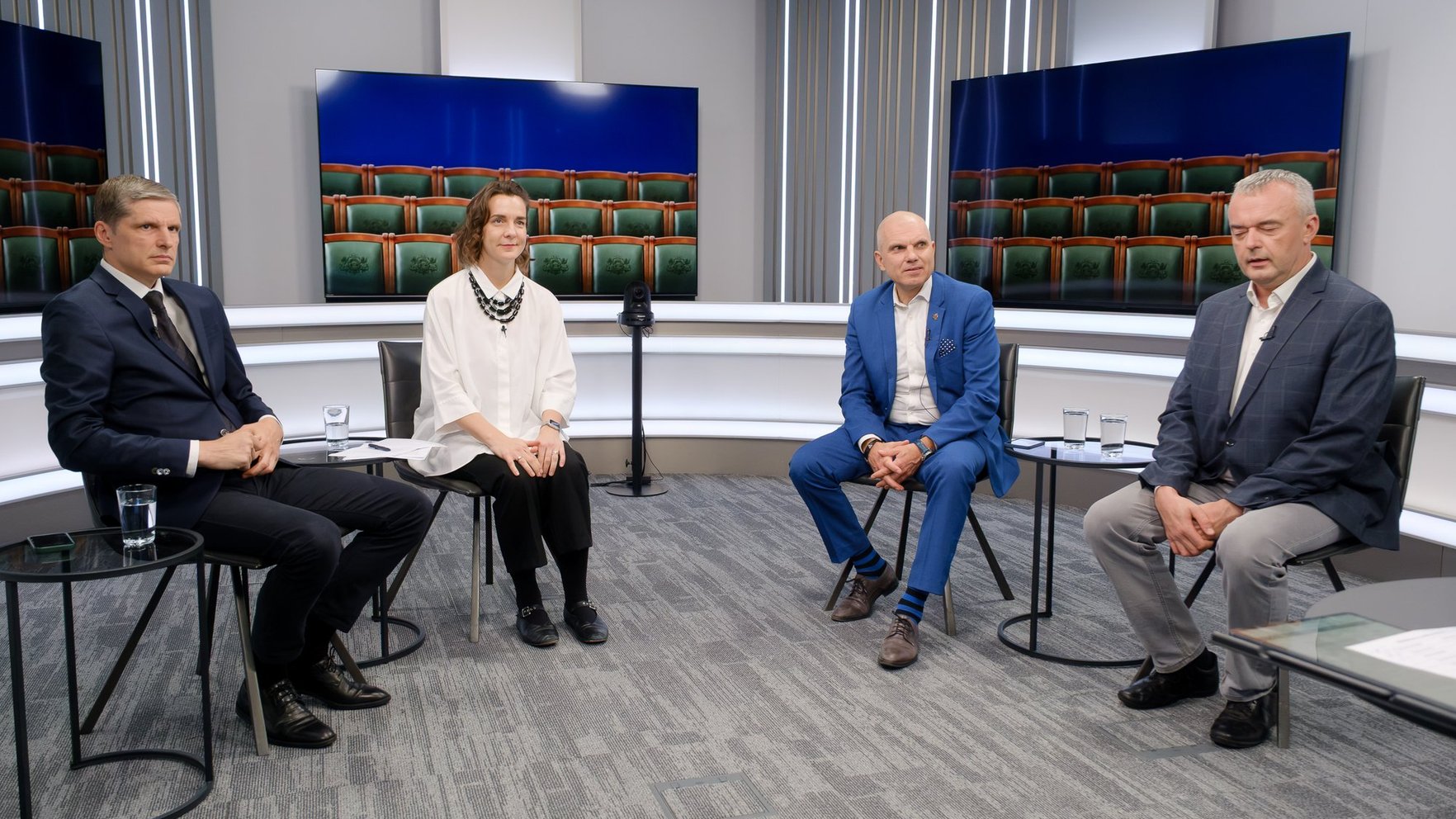
During Delfi TV's election-night broadcast, economic experts discussed the financial dilemmas awaiting Latvia's next government after campaign promises of lower taxes, greater support and faster economic growth. The panel included Aigars Rostovskis, president of the Latvian Chamber of Commerce and Industry, SEB bank economist Dainis Gašpuitis, Luminor's chief economist Pēteris Strautiņš, and Delfi editor Aija Krūtaine.
The budget as the first test
Gašpuitis stressed that how the government builds next year's budget and tackles the deficit will largely shape its room for maneuver in later years. If fiscal space remains constrained, the first year in office could prove difficult. Strautiņš added that unpopular decisions right after elections are a familiar political pattern, and while Latvia's debt level looks comparatively favorable within Europe, rising defense spending further narrows available options.
Harder choices may come later
Experts suggested that the real strain on public finances may not appear immediately but rather a few years from now, when the government could be forced to choose between cutting spending, abandoning certain measures, or raising taxes. Krūtaine noted that many campaign pledges — simultaneously cutting taxes while boosting support spending — are difficult to reconcile with actual budget constraints.
Trimming bureaucracy won't be enough
Although reducing public administration was a frequently cited source of savings during the campaign, Strautiņš pointed out that central and municipal bureaucracy together employs roughly 24,000 people — under 3% of Latvia's workforce — meaning it cannot resolve the larger budget problems alone. Rostovskis added that the main benefit would be reduced administrative burden on businesses and residents rather than savings themselves, though the real political test will come when specific functions must actually be cut.
Growth isn't solely in the government's hands
Rostovskis named export growth and increased investment as key priorities. Strautiņš and Gašpuitis both cautioned that parties often overstate the state's ability to directly dictate economic pace, urging more focus on explaining policy tools rather than promising specific outcomes, since external shocks can quickly upend forecasts.