Experts: Voters Often Care More About What Parties Want to Change Than What They Have Already Done
The campaign for Estonia's Riigikogu elections is already under way several months ahead of the vote. Experts say the low-rated Reform Party can still recover, but voters will want concrete pledges.
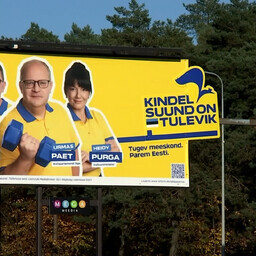
In Estonia, several months before the parliamentary (Riigikogu) elections, parties are already actively campaigning: posters are appearing on streets, politicians are meeting voters and adverts are filling social media. Experts interviewed by the Russian-language service of the public broadcaster ERR explain how parties are trying to regain or consolidate support, and why voters' short memory plays a major role in campaigns.
The Reform Party's position
The Reform Party, led by Kristen Michal, enters this election in an unfamiliar status: it is not the ratings leader. Its support ranges from 10% to 14%. In recent years the party has lost part of its electorate, and unpopular tax decisions and scandals have damaged its reputation.
Advertising expert Madis Ots believes the situation is far from hopeless. He recalled that in 2019, roughly half a year before the elections, Isamaa's rating was below 4% and there were questions about whether the party would survive at all, but an active programme and a clear slogan played a decisive role.
Political communication expert Annika Arras said voters' memory is short, so what parties want to change in the future often matters more to them than past mistakes. Political scientist Mari-Liis Jakobson added that governing parties normally enjoy free media attention, but amid scandals and sceptical coverage the Reform Party needed advertising to explain its decisions.
Fewer resources, different methods
The orange posters of the party Parempoolsed ("The Right") appeared along roads and at stops earlier than the Reform Party's yellow ones. The party relies solely on its own budget, so, according to Ots, it must think carefully about how to stand out before the campaign engulfs the whole country. Jakobson noted that, as a newcomer, it has fewer opportunities to speak out than parliamentary opposition parties.
Experts also see a chance for the Centre Party despite its financial difficulties. It traditionally relies on street campaigning and showed a very strong result in the latest local elections even with little money.
Pledges need to be concrete
Voters are primarily concerned with everyday expenses, prosperity and the state of the economy. Jakobson thinks general promises to revive the economy may not be enough, and that voters now want to know how parties will achieve it. Experts say the main theme that will set the tone of the campaign has not yet been heard.