Expert Urges Baltic States to Launch Night Trains Now, Not Wait for Rail Baltica
European rail expert Elmer van Buuren calls on the Baltic states to develop night train services immediately using existing infrastructure, rather than waiting for the completion of Rail Baltica.
Elmer van Buuren, a leading European rail expert and co-founder of night train operator European Sleeper, is urging the Baltic states to stop waiting for Rail Baltica and start night train services between the region's capitals now. He emphasizes that demand already exists, but supply is unacceptably weak.
Speaking at the Rail Baltic Estonia conference, van Buuren noted that traveling from Central Europe to the Baltics is currently illogical: a train from Warsaw reaches Vilnius, but passengers must then spend the night if they want to continue to Riga. If a single round-trip route from Riga to Kaunas were created, travel time to Latvia would be reduced by 16 hours, and a journey from Berlin, Prague, or Vienna to Riga would take about 18 hours, making it attractive to travelers.
'From our experience, people come from London via Eurostar to Brussels and then take our night train to Prague – a total of 20 hours. It is doable,' van Buuren said. He highlighted that European Sleeper's trains from Brussels to Berlin and Prague are full, and the new Paris–Berlin route, launched in March 2026, already averages 350 passengers per train.
Van Buuren stressed that the Vilnius–Riga train is always full, proving real demand. 'Don't wait for Rail Baltica – launch night train services today!' he urged. He called for vision and cooperation among Baltic states to start.
Latvia already signed a declaration of intent for international night train development in 2021, and then-Transport Minister Tālis Linkaits recalled that in the 1920s–1930s, a night express from Riga to Berlin took around 15 hours and was in demand.
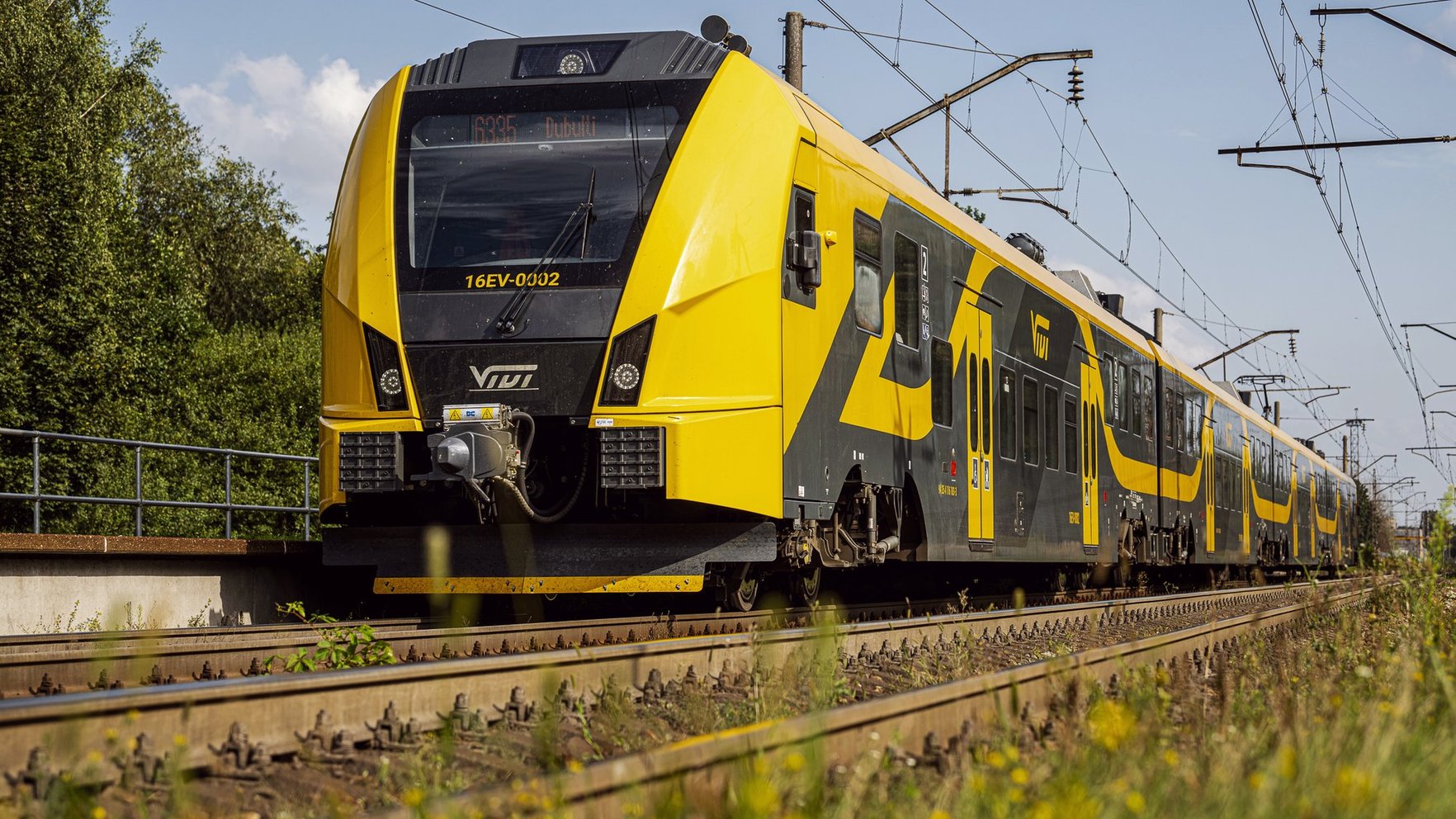
Currently, trains in the Baltics are gaining popularity. In 2025, Vivi trains in Latvia carried 21.33 million passengers, 9.7% more than the previous year, with punctuality at 98.35%. On the Vilnius–Riga–Tallinn route, 98,000 passengers traveled in 2025, including 66,000 international passengers. The train has become a serious alternative to buses – bus ticket sales on the same route dropped by over 25%.
The International Energy Agency states that rail produces about five times fewer emissions per passenger-kilometer than aviation, while European Environment Agency data show road transport accounted for 73% of all transport greenhouse gas emissions in the EU in 2023. Trains connect city centers, saving time spent on airport transfers, security checks, and waiting. Private cars require driving, fuel costs, and parking, while trains allow passengers to work or rest during the journey.
Although the train is not always the fastest option for Baltic capital connections, it has already become a strong alternative, especially for those valuing sustainability and convenience. Growing passenger numbers indicate that demand for this mode of transport continues to rise.