Epic Games used AI to build a new game launcher it says is faster than Steam
Fortnite developer Epic Games has released a public preview of a new Epic Games Launcher, largely written with AI assistance. The company claims it runs faster than rival Valve's Steam client.
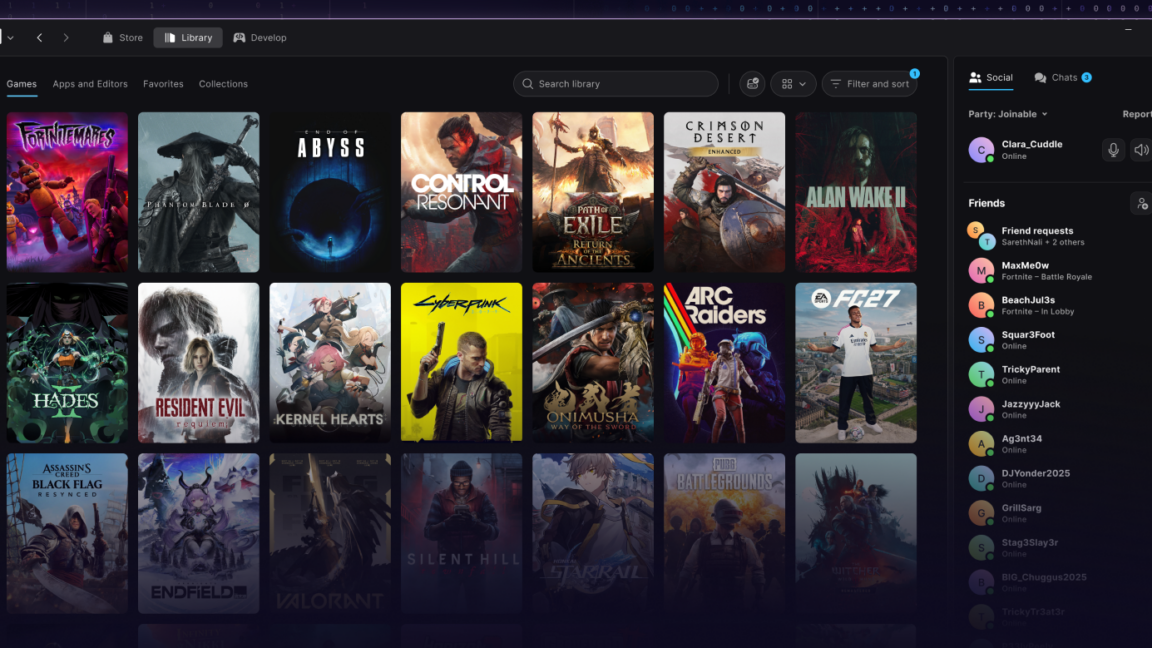
Epic Games, the maker of Fortnite, released a public "Preview" build of a new Epic Games Launcher on October 14. A launcher is the desktop application used to buy, download and start games. Epic built it using so-called "vibe coding," an approach in which AI plays a major role in writing and reviewing code. The company is presenting the tool as an edge over Valve's Steam, nearly eight years after Epic launched its own store to compete with it.
In its announcement, Epic said programming is hard, so it used AI to create a launcher that is much faster and more responsive than the current one, with a new look.
How it was made
Martin Keely, general manager and vice president of the Epic Games Store, told PC Gamer that the team started from scratch. AI served as a tool for writing and reviewing new features on a different technology stack from the one used before. The aim, he said, was to replicate the existing functionality but not the code itself.
Speaking to IGN, Keely said the approach made the team more efficient and let a small group rewrite the code base and release it faster across platforms. It will support Windows and Mac, and a Linux version is planned.
Speed compared with Steam
Epic's messaging puts heavy emphasis on startup speed, saying the launcher was built to be faster than the competition. Testing by the technology outlet Ars Technica confirmed that the new launcher goes from a cold start to the store page a few seconds faster than Steam, provided no login or update problems interfere.
Epic also says the launcher restores from the system tray to the Library screen slightly faster than Steam. The claimed gap is 0.06 seconds, which Ars Technica found unnoticeable in its own testing.