EU Battles Wildfires as France's Gironde Faces Largest Evacuations Since WWII
Wildfires in France's Gironde region have triggered the largest evacuations since World War II, with EU member states sending aid. As blazes continue across Europe, EU officials urge greater preparedness and a shift in mindset.
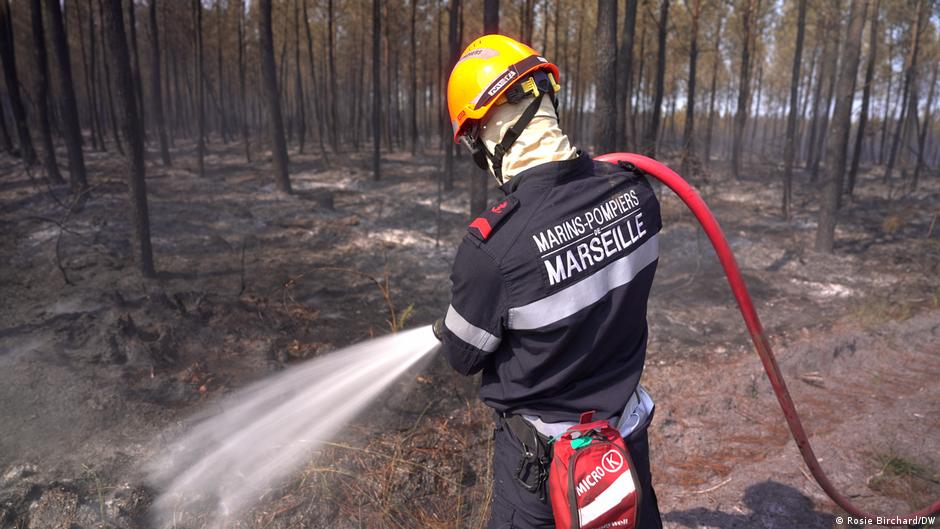
The signal comes suddenly, and within a minute the fire truck is full and speeding off, leaving a cloud of orange dust. "There's always a bit of adrenaline when you get the call," says marine firefighter Julien, part of a Marseille battalion deployed to France's Gironde region to fight a wildfire that prompted the country's largest evacuations since WWII. Some 264 firefighters were injured in the effort, and four lost their lives. In nearby towns, French flags still fly at half-mast.
Fatigue is the biggest issue, according to Letitia, a firefighter and medic: "They're sleeping very little." Lieutenant Damien says the losses are always on their minds. Driving past scorched earth, Julien points to small plumes of smoke that must be extinguished to prevent flare-ups.
Local volunteers — farmers and tradespeople — are helping by ferrying water to firefighters using tractors, vans, and four-by-fours, sometimes without protective gear. "We're here because we're needed," says volunteer Steven Page. Julien calls their role "primordial," saving firefighters precious time.
The battle felt like "David and Goliath," but by Saturday France's Interior Ministry declared the fire no longer progressing. Most of the 220,000 evacuees have returned home. Elsewhere, Greece and Spain are also battling wildfires, and more are expected.
EU crisis management chief Hadja Lahbib visited Bordeaux on Thursday to see how authorities created tactical firebreaks by felling trees across 150 kilometers. Aircraft and crews from Germany, Slovakia, Portugal, Spain, and other nations arrived via the EU's crisis mechanism.
"Climate change isn't knocking at our door. It's here," Lahbib said, reiterating a proposed €10.7 billion EU budget for prevention. Some member states, including Germany, are skeptical. Greenpeace accuses the EU of backtracking on green promises, but Lahbib says this is a time for solidarity, not controversy.
In Brussels, EU crisis response unit chief Maria Zuber stresses the need for early warning tools, evacuation plans, and informing the public. "We need to change our mindset," she says.
Julien knows more intense fires are ahead, with August and September still to come. At a temporary command center in Lège-Cap-Ferret, firefighters rest on rows of camp beds. "We create this temporary bubble to stay well," Julien says, "so it's more like home."