EU plans supplier diversification tool to cut reliance on China
The European Commission will unveil a tool in early December to push companies to diversify suppliers and reduce dependence on a single country. Business groups warn of higher costs, while the EU trade commissioner says firms must factor in the cost of resilience.
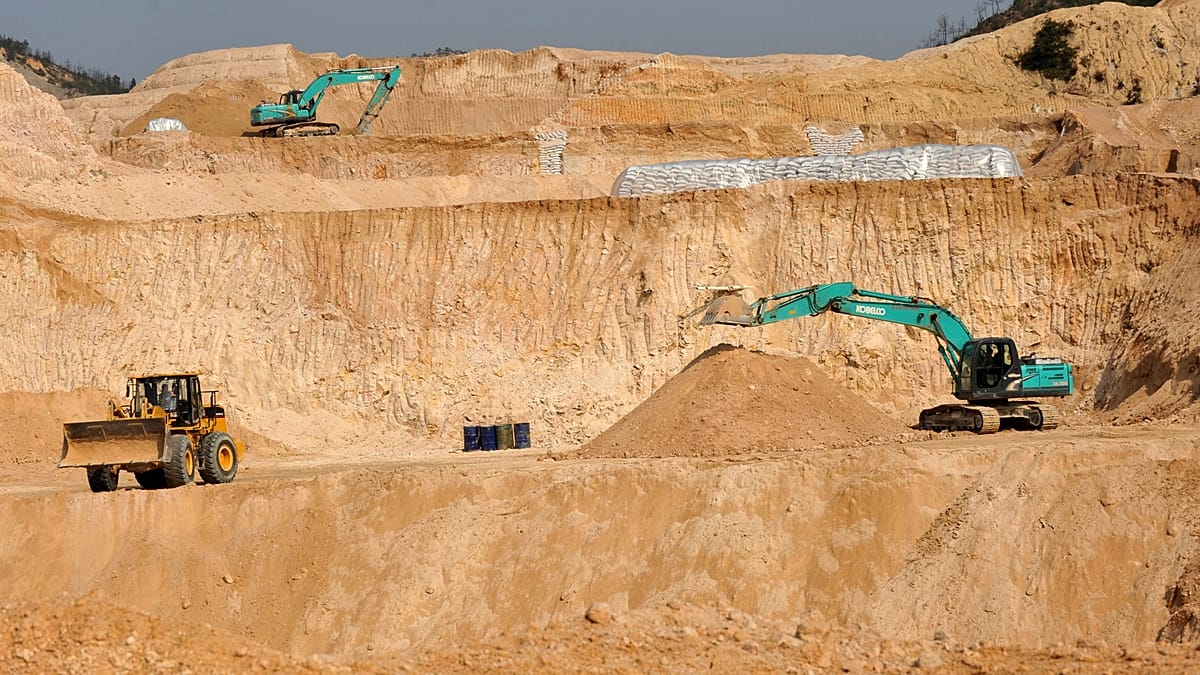
The European Commission, the EU's executive body, will present a new instrument in early December, a week before a meeting of EU leaders. It is designed to push companies to diversify their suppliers and reduce strategic dependence on any one country. China is not named, but the proposal is aimed at Beijing, which blocked rare earth exports in 2025 during a trade war with the US. These materials are essential for green technologies, digital industries and defence.
Earlier risks
That same year the EU car industry was also put at risk, after Beijing cut off access to strategic chips during a dispute with the Dutch government over chipmaker Nexperia. While Brussels negotiates with Beijing to rebalance trade ties, diversification has become urgent in sectors where dependencies create economic vulnerabilities.
Few details are known. In a consultation with businesses that closed on Tuesday, the Commission said the instrument would address cases where a high level of strategic dependence on a single supplier country threatens the EU's security of supply and thus its economic security.
Business concerns
Some companies warned in the consultation that finding alternative suppliers would raise costs. Luisa Santos, Deputy Director General of employers' group BusinessEurope, said firms already try to keep cost-effective structures and work with suppliers who offer the best product, price and performance. She argued the focus should be on areas where dependencies are being weaponised, not, for example, Chinese electric appliances. For rare earths and some other critical raw materials, where China dominates production and processing, she said diversification is not currently an option.
EU Trade Commissioner Maroš Šefčovič said in a 5 June speech that industry would be "on the front line" and that business models should include "the cost of resilience". He pointed to the energy sector, where the EU moved away from Russian supplies after the war in Ukraine began, investing in terminals and interconnectors despite the cost. Prices for EU consumers rose as a result.
Possible scenarios
Tobias Gherke, senior policy fellow at the European Council on Foreign Relations, outlined two options. A "minimalist" one would require diversification in a few sectors, as was done with energy utilities. A "maximalist" one would impose tariffs on anyone buying above a set threshold of a product from one source, hitting green technologies, defence and digital industries at once. It remains unclear which sectors and criteria will apply.