EstLink 2 outage exposes gap in Europe's infrastructure resilience
The six-month outage of the EstLink 2 power link between Estonia and Finland shows that resilience depends on restoring services quickly, not only on holding spare equipment, argues fintech entrepreneur Amir Naser Hojati.
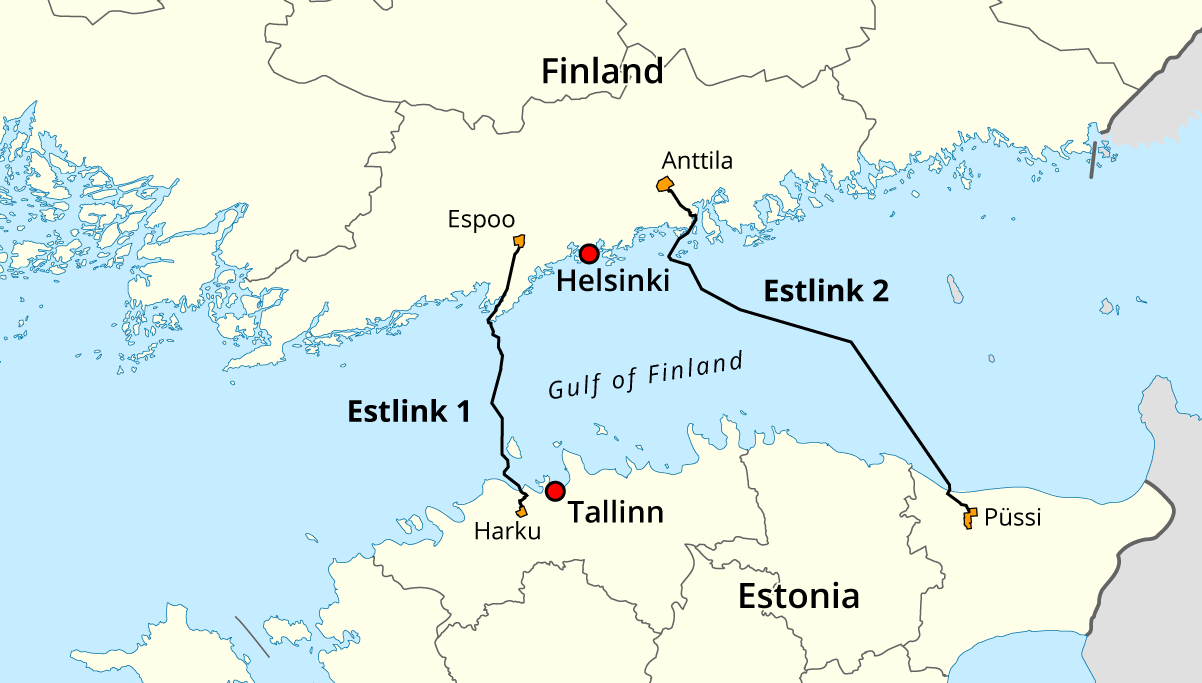
The undersea EstLink 2 electricity cable between Estonia and Finland was out of service for nearly six months after a ship's anchor damaged it on 25 December 2024. The link has a capacity of 650 megawatts. Amir Naser Hojati, a futures trader and fintech entrepreneur, discusses the case in an opinion piece for the Estonian World news site. In his view, Europe's resilience depends on more than spare equipment: essential services must be restored before further failures deepen the damage.
The spare cable was ready, the ship was not
A spare cable was available, but a suitable vessel was not. Operators had to choose between waiting for a specialist cable-laying ship, potentially until late 2025, and adapting a construction vessel. They chose to adapt it. Elering, Estonia's grid operator, estimated repairs would cost €50 million to €60 million, partly because of the modifications. The link returned to service on 20 June 2025.
Electricity stayed available through other routes and generators, but at a higher price. Eesti Energia, Estonia's state-owned energy company, estimated that the missing link raised Baltic electricity prices by an average of €22 per megawatt-hour in the first half of 2025. This is a company estimate, not a final calculation of economic losses.
EU plans and proposed measures
The European Commission's 2025 Cable Security Action Plan warned that repair vessels might be insufficient if several major cables were damaged at once. The EU is also funding emergency telecommunications-cable repair equipment; its current €40 million call does not cover continuing operating and maintenance costs.
Hojati proposes that governments use existing emergency exercises to publish common recovery profiles: what share of normal electricity, water and communications would remain available after 24 hours, seven days, 30 days and 180 days if a second failure occurred before the first was repaired. He also argues that resilience spending should show what service it preserves or restores, how quickly and at what cost.
The author points to Russian refineries, where damage recurs faster than repairs are completed. The International Energy Agency reported that a Russian refinery was struck on average every three days in the first eight months of 2026.