FAA awards $875M AI contract to tackle air traffic congestion
The FAA has awarded Boston-based Air Space Intelligence an $875 million, 12-year contract to build an AI system called SMART for managing air traffic flow. The system is designed as a predictive layer atop a new data backbone replacing aging infrastructure.
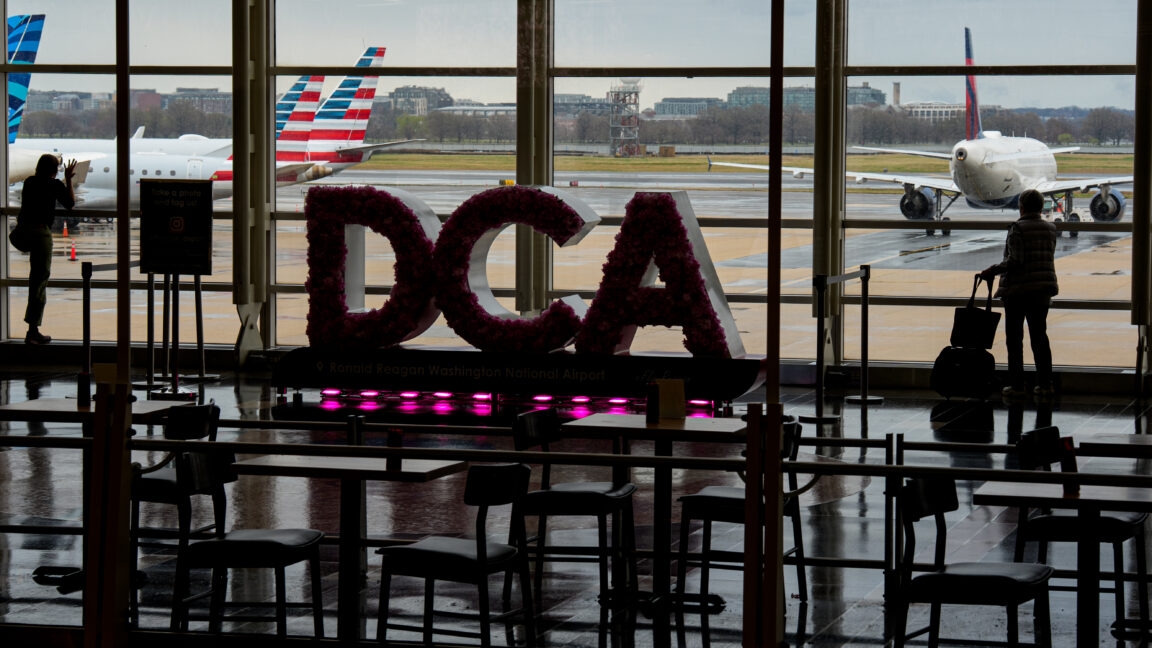
The Federal Aviation Administration awarded Boston-based company Air Space Intelligence an $875 million contract in June, spanning 12 years, to develop an artificial intelligence system called SMART aimed at helping manage air traffic congestion across the United States.
The contract also covers building a new Flow Management Data and Services system to replace the current infrastructure at the FAA's Air Traffic Control System Command Center in Virginia. According to an article in Global Airspace Radar Magazine, the new data system serves as the "backbone," while SMART functions as the "predictive layer" built on top of it.
Air Space Intelligence says its existing Flyways AI platform already assists in managing more than 40 percent of all US air traffic through partnerships with airlines including Alaska Airlines. That platform relies on a 4D digital twin of US national airspace to forecast traffic patterns and weather conditions.
It remains unclear what type of AI models will power the new SMART system. Options range from older deterministic models that follow fixed rules and produce consistent outputs, to machine-learning models that make statistical predictions based on probability, to generative AI models whose outputs can vary and are sometimes inaccurate.
Open questions remain
Industry observers are asking whether SMART's rollout will remain limited to aircraft flying at 24,000 feet and above, as the FAA described in June. Under that scope, the system would handle cruise traffic through that airspace along with the climbs and descents feeding into major metro airports.
Questions also remain about what benchmarks would trigger further expansion of the system — including how it performs under real-world workload and degraded data conditions, as opposed to demonstration settings, and who bears responsibility when a prediction turns out wrong.
The AI rollout comes as the FAA is in the midst of a multibillion-dollar effort to modernize aging infrastructure, having recently begun replacing hundreds of radar systems dating back to the 1980s, along with radios, telecommunication lines, and the voice switches connecting air traffic controllers to pilots.