Fitch to decide on France's credit rating Friday — status quo expected
Fitch will announce its verdict on France's sovereign credit rating this Friday, currently rated A+ with a stable outlook. Analysts expect no change, despite a somewhat worsened economic and political backdrop in recent months.
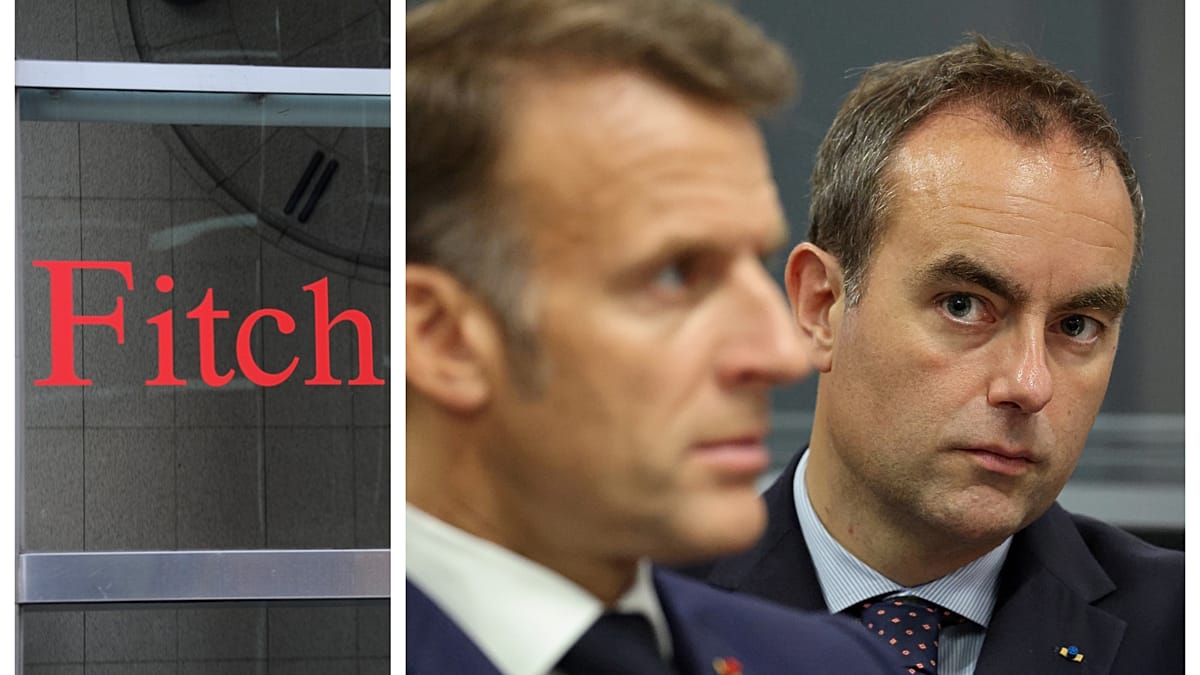
This Friday, rating agency Fitch will deliver its verdict on France's sovereign credit rating, a month before the 2027 finance bill is submitted to the National Assembly. The EU's second-largest economy currently holds an A+ rating with a stable outlook. France lost its double-A rating in September 2025, when Fitch penalised political instability following the short-lived Barnier and Bayrou governments, which lasted 99 and 270 days respectively after the National Assembly's dissolution. The assessment was reaffirmed in March 2026.
Hadrien Camatte, senior economist at Natixis CIB, expects the status quo to be the most likely outcome, though he does not rule out a shift to a negative outlook. Since March, the macroeconomic environment has deteriorated somewhat, largely due to downgraded growth forecasts for 2026 linked to the war in the Middle East. While Fitch projected 1% growth in March, the government has since lowered its own forecast to 0.7%, and Natixis CIB expects just 0.6%.
New figures released Friday morning showed French GDP was flat in the second quarter, compared with the 0.2% rebound initially estimated by statistics agency Insee. A key contributor was a sharper-than-expected drop in agricultural output. Economy Minister Roland Lescure said this was the first tangible impact of the summer's repeated heatwaves and drought.
Deficit and debt concerns
Fitch forecasts a budget deficit of 4.9% of GDP, close to the government's own 5% target, while Natixis CIB expects 5.1%. Analysts warn these levels leave little fiscal room to reduce the deficit in coming years. Public debt is expected to keep rising at least until 2030, compounded by sharply increasing interest costs — a factor Fitch considers central to its assessment.
Analysts note the upcoming budget cycle will be particularly difficult for deficit reduction, and the approaching presidential election could add political volatility. Still, they suggest Fitch may show patience, since the main risks may only fully materialise in 2027. Prime Minister Sébastien Lecornu plans to unveil the 2027 budget on 30 September, with parliamentary debate starting in October. Jean-Luc Mélenchon has already said his France Unbowed movement will seek to bring down the budget through a no-confidence motion.

