France among top three in Europe in combating foreign digital interference, expert says
France is a European leader in tackling foreign digital interference, but AI advances pose new challenges ahead of the 2027 presidential election.

French Prime Minister Sébastien Lecornu convened a meeting with political leaders on June 11 to discuss foreign interference threats. He warned of "serious threats" to the 2027 presidential election, saying the risk affects "the entire political class."
Since the "Macron Leaks" in 2017 – a cyberattack blamed on Russia that dumped documents online to undermine Emmanuel Macron's campaign – the French government has significantly strengthened its fight against disinformation. In 2021, it established VIGINUM, a specialist unit under the Secretariat-General for Defence and National Security (SGDSN) tasked with tracking electoral interference and disinformation campaigns.
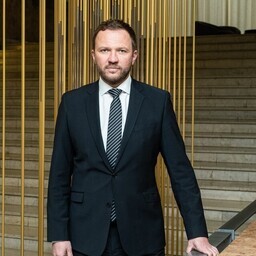
Cybersecurity expert Benoît Grünemwald from ESET says France is "among the top three in Europe" thanks to VIGINUM and the National Cybersecurity Agency (ANSSI), alongside Sweden and Estonia. However, he emphasizes that combating digital interference requires a multi-pronged approach: media literacy, preventive measures by political parties, and VIGINUM's work.
Artificial intelligence (AI) presents new challenges. Grünemwald explains that AI boosts disinformation in both quantity and quality. Large language models mean that one no longer needs to be a French speaker to create convincing content. AI can generate video, text, audio, and combine them to make disinformation more credible. The barrier to entry is lower, and the reach of campaigns is much greater.
Recent municipal elections served as a "dress rehearsal," with authorities identifying several attempts to destabilize the electoral process. However, the impact of foreign interference campaigns remains limited. For example, during the Paris Olympics, despite a significant number of cyberattacks, the impact was minimal thanks to public-private cooperation.
Grünemwald notes that political parties must secure their information systems to prevent new leaks. However, he adds that the limited prominence of digital issues in party manifestos may reflect a lack of attention to the topic.