Genetic selection for children: a New York subway ad campaign revives the eugenics debate
The company Nucleus Genomics advertised embryo screening in the New York subway, promising parents the “best baby”. Writer Jan Grue, who lives with spinal muscular atrophy, argues this is a new, individualist form of eugenics.
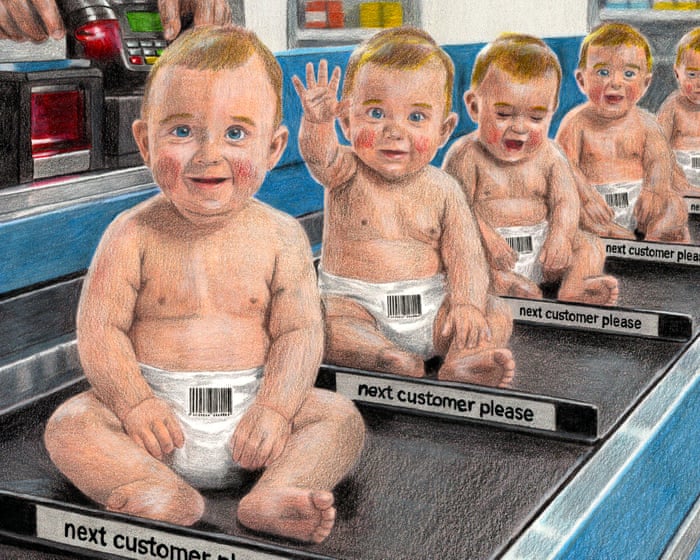
The US company Nucleus Genomics has placed adverts across the New York City subway promising prospective parents their “best baby”. The posters direct people to a website describing an expensive IVF (in vitro fertilisation) procedure in which up to 20 embryos are screened for genetic disorders, eye and hair colour, and traits such as strength, longevity, insomnia and male-pattern baldness. The campaign is examined in a Guardian essay by Jan Grue, who has lived with a form of spinal muscular atrophy (SMA) since childhood.
The author's view
Grue writes that he was born in 1981 and diagnosed at the age of three, and that his muscles weakened as he grew older. In his youth he imagined a version of himself without the condition, an image that later faded.
He argues that such offers fit a present-day drive towards self-optimisation and represent a new, consumer-oriented form of eugenics. After the second world war, eugenics was widely rejected as a racist pseudo-science, whose results included forced sterilisation and institutionalisation in many countries and mass murder in Nazi Germany. Before that, it was popular among scientists, politicians and the public.
“Liberal eugenics”
Towards the end of the last century, some philosophers and bioethicists, including Nicholas Agar and Julian Savulescu, defended “liberal eugenics”, based on parental freedom of choice. According to historian Nathaniel Comfort, eugenics had already begun shifting its focus from populations to individuals in the mid-20th century, alongside the rise of medical genetics. Denmark now sees over 95% of pregnancies with an identified Down syndrome terminated.
Grue notes that Nucleus's claims about height and intelligence being genetic refer to population-level estimates, which are themselves contested, and do not mean a child's traits can be reliably chosen. He urges readers to ask what such companies consider “best” and what they see as valuable or worthless in a human life.