Guardian comment: new stories about war, from Ukrainian artists to a bar of soap in a gallery
In a Guardian comment piece, chief culture writer Charlotte Higgins argues that the way war is narrated influences how wars are fought. She points to Ukrainian and Palestinian artists who are finding new forms for a more truthful account of war.
Charlotte Higgins, chief culture writer at the British newspaper The Guardian, argues in a comment piece published on 14 November that the way wars are told as stories affects how they are conducted. She draws on classical scholar Alice König, who has studied ancient and modern warfare and holds that stories, artworks and memorials shape expectations of the future and influence real-world behaviour.
Stories and power
Higgins cites war correspondent Christina Lamb, who has noted that since Homer, depictions of war have shown women being trafficked and raped, while such violence was taken for granted for centuries. Rape was recognised as an independent war crime and a tool of genocide only in 1998.
The clearest contemporary example, in her view, is Russia, where Vladimir Putin constantly invokes the second world war and presents the invasion of Ukraine as its extension, a "denazification". She also mentions the US midterm elections, where Donald Trump's story about the Iran war was undermined by high fuel prices.
New forms
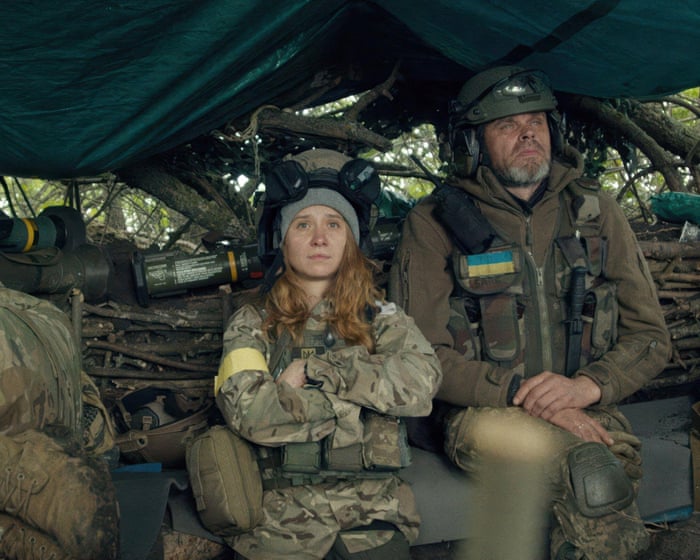
The author calls for more truthful stories about war, referring to the poet Wilfred Owen. As the war continues, Ukrainian artists and writers are seeking new forms. Writer Sasha Dovzhyk's book Apocalypse Baroque combines real people's stories with folklore motifs. Alisa Kovalenko's films Traces and My Dear Theo are intimate first-hand records of war, free of false heroism.
Artist Dasha Chechushkova makes "situational gardens" with friends: modest flowerbeds in memory of the dead. Her etchings after Goya are on show in the exhibition The Rupture at the Talbot Rice Gallery in Edinburgh, expressing the depression and helplessness the war has brought. The same show includes a work by Palestinian artist Taysir Batniji: a stack of soap bars on a pallet engraved with an Arabic phrase meaning "nothing is permanent". Visitors may take one bar with them.