Four types of thinker identified: which one are you?
A study reveals four thinking patterns—worriers, domestics, bodily thinkers, and work-hard, play-hards—highlighting how thoughts shape happiness.
Study on Human Thoughts
Economists from Claremont Graduate University in California and Wuhan University in China conducted a study to explore people's conscious thoughts. 258 volunteers aged 19 to 71 used an app that beeped eight times a day for two weeks, prompting them to write down their thoughts, activities, and happiness levels. Over 23,000 responses were collected.
Key Findings
About half of thoughts were intentional, the rest intrusive or mind-wandering. Sensory information, like feeling tired, accounted for nearly a fifth of thoughts, followed by work (17%) and food (14%). About 10% of thoughts were about hobbies and relationships. When thoughts focused on desires, nearly half involved food or drink, especially coffee. Thoughts about sex were rare, possibly due to reluctance. The mind was rarely blank, with only a fraction of a percent reporting no thoughts.
Four Thinker Types
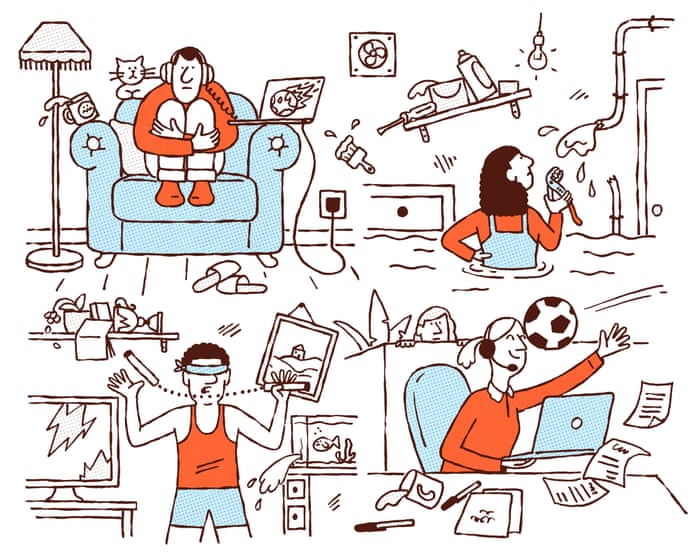
The researchers identified four tentative groups, noting people may move between them. The groups are based on common thought themes, not background or activities.
Worriers
This group thinks about world events, politics, and social issues about 60% more than average. They worry about wars, pandemics, safety, and health. Interestingly, they think about music nearly twice as often, possibly to mitigate emotional toll.
Domestics
Domestics devote about 50% more thoughts than average to chores, home, finances, and stories from movies, books, and TV. Their thought words vary widely, including 'solve', 'process', 'debate', and 'document'.
Bodily Thinkers
This is the youngest group (average age 32), nearly two-thirds female. They have the highest rate of unwanted intrusive thoughts (28%). Common words include 'therapist', 'ache', and 'overwhelm'. The group may reflect shifting thinking patterns due to physical or mental health issues.
Work-Hard, Play-Hards
Their thoughts are split between work (50% more than average) and leisure (hobbies, games, art about 25% more). This group has the highest income and happiness scores, with slightly more males than females.
Link to Happiness
The study partly tested Marcus Aurelius's claim: 'The happiness of your life depends on the quality of your thoughts.' Researchers found thought content was more predictive of happiness than other factors. However, they caution against generalizing due to the WEIRD (Western, Educated, Industrialized, Rich, Democratic) sample.
/nginx/o/2026/10/01/17948710t1h4397.jpg)