Estonia bans truck overtaking on Tallinn–Pärnu highway in a national first
A ban on trucks overtaking other vehicles took effect Thursday on a 2+1 lane section of the Pärnu–Tallinn highway in Estonia, the first such restriction in the country. It aims to improve traffic flow and safety.
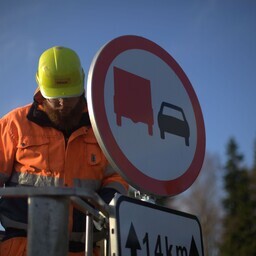
Estonia introduced its first-ever ban on trucks overtaking other vehicles on Thursday. The restriction covers a 2+1 section of the Pärnu–Tallinn highway, where traffic has two lanes in one direction and one in the other. Signs prohibiting truck overtaking have not previously been used on Estonian roads.
Why this stretch
Viktor Kisseljov, head of the northern division of the road maintenance service at the Transport Administration, said the overtaking lanes here are shorter than on comparable sections. Heavy vehicles also make up 25 percent of traffic on this busy road. He said trucks overtaking one another is sometimes unreasonable, and in a long convoy it is not safe for other road users either.
The restriction is intended to keep traffic moving more smoothly and let car drivers pass slower trucks.
Safety figures
The Estonian Traffic Insurance Fund reports 20 accidents a year on this stretch, involving vehicles changing lanes or hitting roadside barriers. Germany and Sweden already apply similar restrictions to trucks. Lauri Potsepp, a member of the fund's management board, said accidents fell by 30 percent in Germany and by as much as 50 percent in Sweden.
Enforcement
Sirle Loigo, head of the traffic enforcement unit at the Police and Border Guard Board, said there are no current plans for extra enforcement, as police expect road users to act responsibly. Police stress that informing drivers is the most important part of any rule change.
No plans for other roads
The rule will not be extended to Estonia's other 2+1 highways, whose overtaking lanes are nearly twice as long. On the Pärnu highway they measure 900 to 1,500 meters. The Transport Administration intends to upgrade the Ääsmäe–Kustja section to a four-lane divided highway, but not until the next decade.