Eastern Estonia still has no plan for inpatient psychiatric care after Ahtme Hospital closes
In Estonia's Ida-Viru County, it remains unclear how inpatient psychiatric care will be provided once Ahtme Hospital closes next spring. Only four psychiatrists remain there, and urgent cases are sent to other cities.
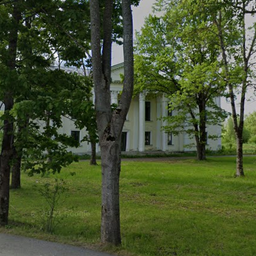
In Estonia's Ida-Viru County (Ida-Virumaa), it has still not been decided how residents will receive inpatient psychiatric care after Ahtme Hospital closes next spring. It is the only institution in the county offering this specialised care. The situation was reported by ERR, Estonia's public broadcaster.
A shortage of doctors
Ahtme Hospital once employed ten psychiatrists; now only four remain. Hospital head Georgi Belotserkovski links the staffing crisis partly to years of uncertainty. The plan was to close the hospital once a new psychiatric unit opened at the Ida-Viru Central Hospital, but that unit was never built. According to Belotserkovski, young specialists are unlikely to come to work at an institution that will close in three years.
For a year and a half, no psychiatrists have been on duty in Ahtme. Patients needing urgent hospitalisation are sent to other cities, most often Tartu, where free places are also in short supply.
Hospital heads and patient advocates
Tarmo Tohver, head of Ida-Viru Central Hospital, says the outpatient service is working but there is no inpatient ward, so the main question is how to organise doctors' work. In his words, a decision must be made within five months.
Ursi Jooste, head of the Ida-Viru Chamber of Disabled People, believes that shifting treatment mainly to an outpatient basis will not solve the problem. People with mental and intellectual disabilities often cannot explain their problems themselves. She cites a patient who urgently needs a new psychiatrist because his doctor has retired and the hospital no longer admits patients.
Remote consultations could be one way to offset the shortage of specialists. Belotserkovski, however, doubts they can fully replace meeting a patient in person, since a psychiatrist needs to observe reactions and body language.
A private psychiatrist can be seen within a week, but at a considerable cost. The public system lacks both doctors and the money needed to expand inpatient care.