Estonian Graphic Art Collector: Artist and IT Specialist Pools Funds with Fellow Enthusiasts
Artist and IT specialist Aleksandr Lefbard has spent about eight years collecting Estonian art, mainly graphic works, together with like-minded people. The collection now holds several thousand pieces, and its owners want to open it to a wider public.
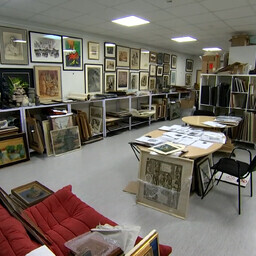
In Estonia, artist and IT specialist Aleksandr Lefbard and a group of like-minded people have for about eight years been pooling their money to collect Estonian art, mainly prints and other graphic works. The collection has reached several thousand pieces, and its owners are now considering showing it to others. Lefbard spoke about it to "Aktuaalne kaamera +", the news programme of Estonian public broadcaster ERR.
Why graphic art
Lefbard considers Estonian graphic art a distinctive phenomenon. In his words, German and French graphic artists were mostly painters who worked in painting and printmaking at the same time, whereas in Estonia graphic artists focused specifically on graphics. About 90% of Estonian graphic art consists of small works, and it also has a certain mystical aspect. He calls it a national art.
The collector proudly shows works by Eduard Viiralt, Jüri Arrak, Leonard Lapin, Ewald Okas and others. The collection includes pieces by both unknown and famous artists. Lefbard says Arrak's style is instantly recognisable, and he also mentions Mare Vint, a glassblower by profession, whose technique he describes as very fine.
Prices and acquisition
Estonian art is popular at home: a recent charity auction held by the Estonian Artists' Union produced a record total of 2.3 million euros. The largest sums go to paintings, but graphic art is also highly valued. At the same time, affordable works exist – collectors bought one piece by Hugo Mitt for only 35 euros.
Lefbard buys works at auctions, often online. Heirs of artists and collectors sell some, and sometimes good pieces are found in the attics of old houses and have to be rescued. Works often need cleaning, framing and identification of the author, and the collectors turn to art historians, including Mai Levin. He adds that the hobby is expensive.
Opening the collection
Lefbard says that interest gradually turned into passion and then a mission. For a start, the collectors put several works by well-known artists up for auction, but they hope to show the rest over time. He wants works to reach other people or a museum, since at present they remain closed to ordinary people.