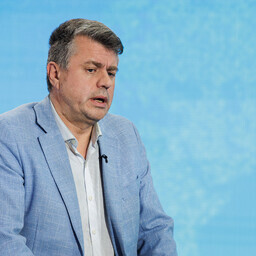
Estonian minister: there simply isn't money in the budget to raise teachers' pay
Estonia's Education Minister Kristina Kallas said the state budget has no funds to raise teachers' salaries, while the teachers' union warns it is ready for protest action.

Estonia's Education Minister Kristina Kallas (Eesti 200) told negotiators on education sector pay that the state budget currently has no funds for raising teachers' salaries, and that any increase would only be possible by cutting other spending. Reemo Voltri, a representative of the Estonian Education Personnel Union, warned that teachers are prepared to take protest action if necessary.
According to Kallas, in the current economic situation it is almost impossible to plan any spending growth into the state budget, since revenue from economic growth only covers increases in already-indexed expenses such as pensions and defence spending. This means finding additional money for education is extremely difficult, and any pay rise for teachers would require reallocating funds from elsewhere.
The minister said she does not consider it realistic to meet the union's demand to raise the minimum teacher salary next year to the level of Estonia's average wage, currently 2,312 euros, noting that most Estonians themselves do not earn the national average wage. She acknowledged that money is a finite, countable resource and that it simply is not currently available in the state budget, even though teaching will bring great value to society in the future.
Kallas also said that beyond pay, the growing workload on teachers must be addressed, a problem worsened by a rising number of children with special needs. She cited recent PISA study results showing Estonia has the lowest student-to-teacher ratio in Europe and many small gymnasiums that absorb a significant share of education funding. Due to demographic change, from 2028 the number of children starting school will fall by 3,000 each year, reducing the per-pupil funding local governments use to pay teacher salaries.
Teachers want long-term certainty
Voltri stressed that the difficult budget situation should not mean compromising on education quality. Teachers expect a minimum salary of at least 2,300 euros, or fulfilment of the pre-election promise to keep average teacher pay at 120% of the national average wage. If teacher salaries keep falling behind the national average, as has happened under the current government, it would be an alarming signal for current and future teachers, showing the profession is undervalued — a trend that, he said, PISA/OECD analysis links to declining education quality.
Voltri said teachers are open to compromise and would accept a smaller raise than demanded if the state budget strategy guaranteed long-term certainty that promises would be kept in future years. However, they would not accept salaries not rising at all, which would mean immediately falling five to six percentage points behind average wage growth. He recalled that during a previous strike, despite a similarly difficult situation, a 71-euro increase was still achieved, and noted that an education workers' protest is planned outside the Riigikogu building on September 14, with further action not ruled out.
A hard choice for local governments
Randar Lohu, head of the finance department in Saku municipality, said a significant state-mandated increase in the minimum teacher salary puts local governments in a difficult position regarding pay for other staff. In Saku, teachers already earn 2,400–2,500 euros gross, above the national average, but constant state pressure demands ever more funding. If school teacher salaries rise by more than 10%, the municipality may not be able to raise pay equally for roughly 650 other staff, including interest-education instructors and other municipal institution workers. More precise figures are expected once state budget negotiations conclude later this month. In two weeks, education workers, state representatives and local government specialists are due to meet again to discuss the minimum teacher salary level.