Estonia's planned €50m electric island ferry passes first model tests
A scale model of Estonia's planned electric ferry reached 14 knots in tests in Germany, against a contract requirement of 12 knots. Ice tests follow in Finland in late November.
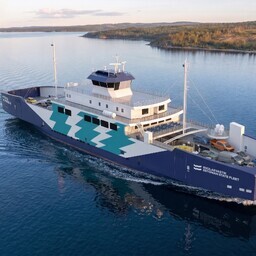
A scale model of a planned electric ferry for Estonia, under a construction contract worth €49.93 million, has passed its first tests in Germany. The model reached 14 knots, while the contract sets a maximum speed of 12. The result was reported by the State Fleet (Riigilaevastik), which manages Estonia's state-run ferries.
Once built, the vessel will be the fifth ferry serving the islands of Saaremaa, Muhu and Hiiumaa. It is planned for the Virtsu–Kuivastu route and will be Estonia's first ferry charged from shore. The route links the mainland with Muhu and, via a causeway, Saaremaa, and is among the country's busiest ferry crossings.
Tests in Potsdam and Helsinki
The week-long tests took place at the Schiffbau-Versuchsanstalt Potsdam center. They assessed the vessel's seagoing and hydrodynamic properties, energy efficiency and propulsion solutions. The team used an 8.2-meter hull model fitted with accurate scale copies of the drives and propellers.
Eero Avi, a shipbuilding engineer and chief specialist on the State Fleet's ferry project, said the model reached 14 knots with some power reserve left. Energy consumption is low for a vessel of this size and stays within contract limits, with some margin.
Ice tests are scheduled for late November at Railotech's ice model basin in Helsinki. They will check how the hull and propulsion perform in level ice of varying thickness and in brash ice, made up of small fragments of floating ice.
Specifications and funding
The full-sized ferry will have a 3 MWh battery, enabling fully electric operation in normal conditions on the route. Biodiesel generators will keep service running in heavier seas and emergencies, and the range without refuelling is at least 1,000 nautical miles. The ship will be close to 100 meters long and carry up to 380 passengers and up to 110 passenger vehicles, or eight trucks.
It will be built by Polish shipyard CRIST S.A. and designed by subcontractor LMG Marin France, which also designed the ferries now operating the route. Of the contract value, €28 million comes from the EU Modernisation Fund and the rest from Estonia's national CO₂ quota sale funds. The ferry is due to enter service at the end of 2028.
Earlier this year, a cold spell caused thick sea ice and falling sea levels, disrupting island ferry services: sailings were cancelled and some smaller islands were cut off from the mainland.