Estonian therapists: no drawing skills needed for creative arts therapy
Estonian creative arts therapist Epp Sussen says people of all ages can benefit from creative arts therapy, and no artistic skills are required. Therapists in Estonia do not make diagnoses.
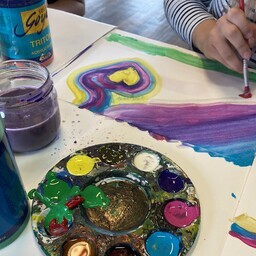
Creative arts therapy can help people of any age express emotions and memories that are hard to put into words, and it requires no artistic ability. This was said by Estonian therapist Epp Sussen on the programme "Terevisioon", as reported by public broadcaster ERR.
Sussen is a board member of the Estonian Society of Creative Arts Therapies (ELTÜ). She notes that people are used to talking, but memories and experiences often involve colors, sounds and sensory impressions that are not easy to articulate.
Suited to many needs
According to Sussen, visual art therapy can benefit everyone from children to elderly adults. It can support personal reflection and career decisions, and help with depression or recovery. She stressed that the possibilities are many while contraindications are very few.
Fellow creative arts therapist Katre Eesmaa said people are often reluctant to try therapy because they believe they cannot draw. However, no form of creative arts therapy requires participants to be able to draw, paint, dance or play an instrument.
An exercise for the blank page
Eesmaa described a simple way to ease the pressure of facing an empty sheet: draw 30 to 40 dots across the paper and connect them with lines. Working at an easel lets people step back and view the work from a distance. With abstract images, the paper can be turned upside down to see which shapes or patterns appear. Once a suitable shape is found, it can be colored in.
The process matters most
Sussen emphasized that the picture does not have to look good, since the process matters more. Sometimes even squeezing and splattering paint helps. She said many young people do not want to talk in therapy and would rather sit quietly and draw, which lets them release emotions they are holding in.
She explained that talking engages the rational mind, while trusting the creative process can help people discover something new in themselves.
Sussen also stated that creative arts therapists in Estonia do not make diagnoses. A completely black drawing is not taken as a sign of depression; the person can explain themselves what the color means to them.