India's Supreme Court declares safe walking a fundamental right
In June, India's Supreme Court ruled that the right to walk safely on designated footpaths is a fundamental right, highlighting the long neglect of pedestrian infrastructure in Indian cities.
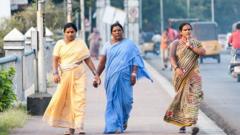
India's Supreme Court ruled in June that the right to walk safely on designated footpaths is a fundamental right, imposing a corresponding duty on the state to provide safe pedestrian infrastructure. The ruling came after a tragic incident in which a five-year-old boy was crushed by a truck while walking to school with his father.
India remains a nation of walkers. According to census-based estimates, around 45 million people walk to work every day, compared with only about 5.4 million who commute in private cars, jeeps, or vans. Nearly a third of urban workers walk to work, and virtually every bus or metro journey begins and ends on foot. A 2019 survey of selected cities found that 63% of all journeys were made on foot, making pedestrians the single largest group of road users.
Many are what researchers call "captive pedestrians" – people who walk not by choice but because they cannot afford another option. Women are especially dependent on walking. Yet those who contribute least to congestion and pollution often face the greatest risks. Even where pavements exist, they are often broken, narrow, or inaccessible to older people, children, and those with disabilities. They are also blocked by motorcycles, parked cars, encroachments, or excavation works. Faded zebra crossings are treated as little more than road markings no one respects.
A landmark 2011 study of six Indian cities found that the country's streets routinely fail pedestrians because of "poor and unsafe" infrastructure. The Walkability in Indian Cities report by the Clean Air Initiative for Asian Cities gave the surveyed cities a median walkability score of just 47 out of 100, with the worst conditions around public transport terminals – ironically the places where most journeys begin and end on foot.
Pedestrians officially account for roughly a fifth of road deaths, but independent studies estimate the share is closer to 30–40%. In Delhi and Mumbai, they account for more than half of all road deaths. According to a World Bank study, crashes cost India an estimated 3–5% of its GDP each year.
The court's judgment challenges decades of Indian urban planning, where progress has often been measured in kilometres of expressways, flyovers, and elevated corridors. Justice PS Narasimha wrote that walking is "the simplest of the simple human activity, inextricably connected to life," and that "the fundamental right to walk on demarcated footpaths shall override the privilege of a motorised vehicle."
Experts point to governance failures. "Are footpaths maintained and cleaned? Does the city ensure they aren't encroached upon?" asks Rahul Goel, a transportation researcher at IIT Delhi. "In Delhi, many roads do have footpaths, but they're often unusable because of poor governance." Poor design adds to the problem: footpaths are often too narrow, too high above the road, or end abruptly, forcing people back onto the carriageway.
Advocate Rishi Aggarwal, who leads the Walking Project in Mumbai, says, "People know about the latest cars, but walking has become invisible." His group organizes city walks to encourage residents to notice broken pavements and blocked crossings – and to demand better standards.
The judges also reflected on walking as something greater than transportation: "necessity for the poor, meditation for some, an act of resistance for others and a path to discovery." They noted that walking helped shape India's freedom struggle, from Gandhi's salt march to Subhas Chandra Bose's "Delhi Chalo" (March to Delhi).
To make walking safe, cities need redesigning. Experts advocate default urban speed limits of 30 km/h, narrowed traffic lanes, altered road surfaces, and other traffic-calming measures. "Walking is more than a travel option," says transport scholar Geetam Tiwari. "Therefore a safe walking infrastructure requires more than creating footpaths and safe crossing." Walking spaces must integrate street vendors, shaded paths, resting areas for the elderly, and play spaces for children.