Japan revises imperial succession law but retains ban on female emperors
Japan's parliament approved a bill on Friday to amend the Imperial House Law, allowing adoption of distant male relatives and enabling princesses to keep royal status after marriage, while keeping the prohibition on female emperors.
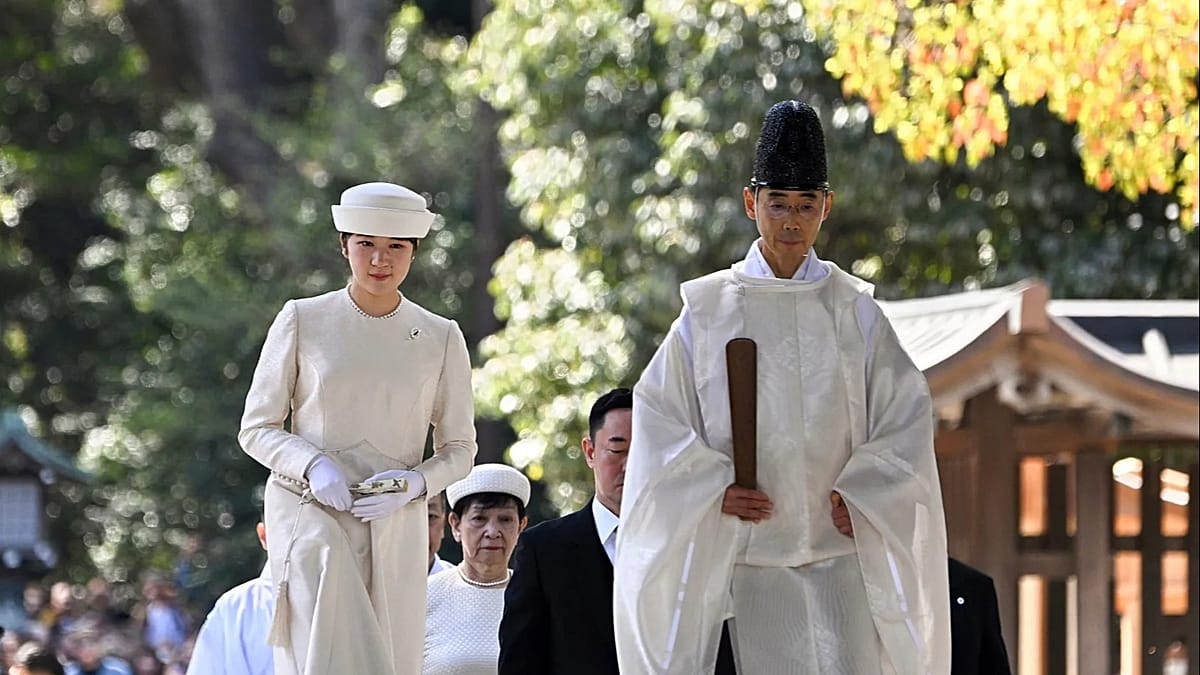
Japan's parliament passed a bill on July 17, 2026, to revise the Imperial House Law governing succession to the Chrysanthemum Throne. The amendments permit the imperial family to adopt male distant relatives over the age of 15, making them and their future sons eligible for the throne. Additionally, princesses may retain their royal status after marrying outside the family.
However, the ban on female emperors remains in effect, despite the popularity of Emperor Naruhito's 24-year-old daughter, Princess Aiko, and concerns about the shrinking imperial lineage. Under the current rules, succession will pass to Naruhito's younger brother, Crown Prince Fumihito, 60, and then to his son, Prince Hisahito, 19. Without further changes, the lineage would end if Hisahito fails to produce a son.
The male-only succession rule originates from the 1889 Imperial House Law, which established that only males descended through the paternal line could become emperor. This was carried over into the 1947 law. The latest amendment is the first revision to the main text since 1949.
A nationwide poll by the Mainichi Shimbun in late March found 61% support for a female emperor, with 9% opposed. Another poll of over 2,000 people conducted June 20-21 showed 73% in favor. Despite this, some conservative political figures, including Japan's first female Prime Minister Sanae Takaichi, oppose female succession.
Hideya Kawanishi, a professor at Nagoya University and an expert on Japan's imperial system, told AFP that the new bill "fails to reflect public opinion." He added, "For the conservative camp of the ruling Liberal Democratic Party, the overriding goal is to preserve male-line, male-only succession, and that is precisely why they do not want to listen to the voices of the people. This is because the solid conservative base that supports them harbors attitudes akin to male chauvinism, and this measure was probably necessary to secure their votes in elections."