New Spray-On Powder Stops Life-Threatening Bleeding in One Second
Researchers at KAIST, including an Army Major, have developed a next-generation spray-on powder that can stop severe bleeding in about one second. The technology, which transforms into a strong hydrogel barrier, could save lives on the battlefield and in civilian emergencies.
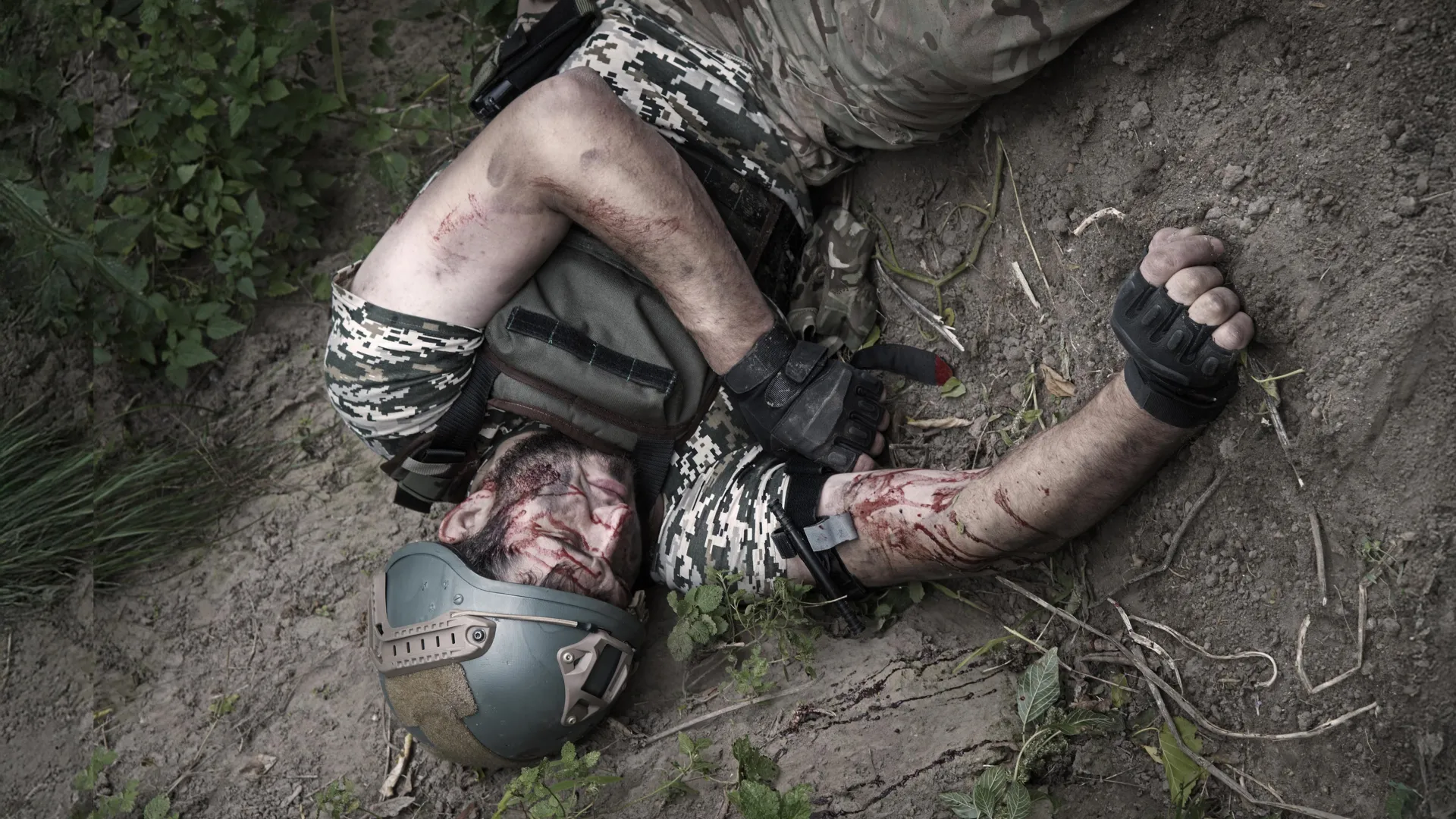
Excessive blood loss is the leading cause of death from combat injuries, making rapid bleeding control one of the biggest challenges in battlefield medicine. Researchers at KAIST, including an Army Major, have developed a next-generation spray-on powder that can stop severe bleeding in about one second. The innovation could significantly improve survival for wounded soldiers while also offering broad potential for civilian emergency care.
The research team, led by Professor Steve Park of KAIST's Department of Materials Science and Engineering and Professor Sangyong Jon of the Department of Biological Sciences, created a powder-type hemostatic agent that quickly transforms into a strong hydrogel barrier when sprayed onto a wound. Because an Army Major directly participated in the project, the technology was designed with real battlefield conditions in mind. The powder hardens almost instantly, remains stable during storage, and can be deployed quickly even in demanding environments such as combat zones and disaster areas.
Powder Designed for Deep and Complex Wounds
Conventional patch-type hemostatic products are widely used in medicine, but their flat design makes them difficult to apply to deep, irregular, or complex wounds. They can also be sensitive to temperature and humidity, creating challenges for storage and field use. To overcome those limitations, the researchers developed a powder that can conform to wounds of many different shapes and sizes. A single product can be used on deep, large, and uneven injuries, making it more versatile than traditional alternatives.
How the AGCL Powder Works
The new material, called 'AGCL powder,' combines several naturally derived, biocompatible ingredients: Alginate and Gellan Gum (which react with calcium for ultra-fast gelation and physical sealing) along with Chitosan (which bonds with blood components to enhance chemical and biological hemostasis). When the powder comes into contact with blood, it reacts with cations such as calcium and transforms into a gel in about one second, rapidly sealing the wound. Its three-dimensional internal structure also allows the powder to absorb more than seven times its own weight in blood (725%), enabling it to quickly block blood flow even during heavy, high-pressure bleeding. According to the researchers, the material outperformed commercially available hemostatic agents, achieving an adhesive strength greater than '40kPa,' which is strong enough to withstand firm hand pressure.
Strong Safety and Healing Results
AGCL powder is made entirely from naturally derived materials. Laboratory testing showed a hemolysis rate below 3%, cell viability above 99%, and an antibacterial effect of 99.9%, indicating that it is safe when it comes into contact with blood. Animal studies also demonstrated rapid wound healing, along with improved regeneration of blood vessels and collagen. In surgical liver injury experiments, the powder reduced both blood loss and the time required to stop bleeding compared with commercial hemostatic products. Liver function returned to normal within two weeks after surgery, and researchers found no evidence of systemic toxicity.
Another important advantage is durability. The powder maintained its performance for two years under room temperature and high humidity conditions, allowing it to remain ready for immediate use in harsh military or disaster environments.
Potential Beyond the Battlefield
Although the technology was originally developed for national defense, the researchers believe it could have wide-ranging applications in emergency medicine. Possible uses include disaster response, healthcare in developing countries, and treatment in medically underserved regions. The project is considered a representative spin-off case in which defense research has been adapted for civilian use. In addition to emergency battlefield treatment, the technology may also be useful for controlling bleeding during internal surgery.
The research received recognition for both its scientific innovation and defense value, earning the 2025 KAIST Q-Day President's Award as well as the Minister of National Defense Award at the 2024 KAIST-KNDU National Defense Academic Conference. The study was led by KAIST PhD student Kyusoon Park (Army Major) and PhD candidate Youngju Son under the guidance of Professor Steve Park and Professor Sangyong Jon. It was published online on October 28, 2025, in the international journal Advanced Functional Materials (IF 19.0), which specializes in chemistry and materials engineering. The research was supported by the National Research Foundation of Korea (NRF).