What war-related topics Ukrainians avoid discussing, and why
Ukrainian experts and a soldier describe which war-related subjects civilians and military personnel avoid discussing openly, explaining the mechanisms of self-censorship and self-deception behind it.
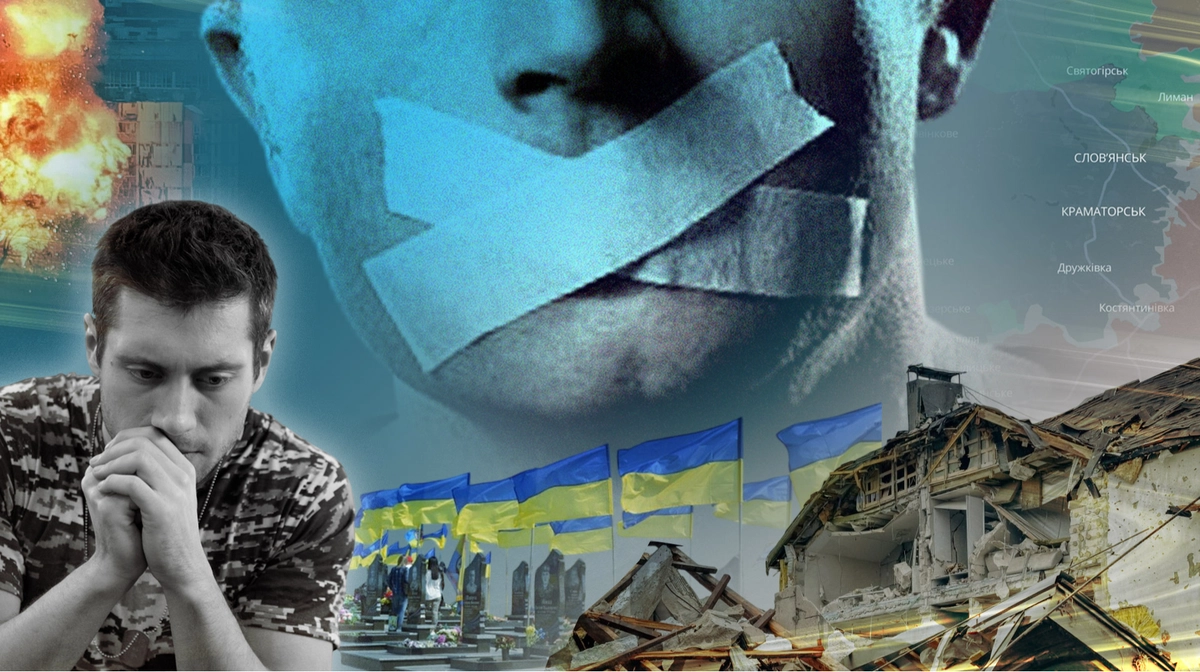
More than three years after the full-scale invasion began, Ukrainian society still treats a number of war-related topics as unsuitable for open discussion. According to Ukrainska Pravda, immediately after February 24, 2022, an unspoken agreement emerged not to discuss anything that could divide society or damage the country's international image — from corruption in government to crimes within the army. Over time, however, attitudes shifted: surveys show that while 70% of Ukrainians considered criticizing the authorities during wartime necessary in autumn 2023, that figure had risen to 90% two years later.
Topics civilians avoid
Political psychologist Svitlana Chunikhina and psychoanalyst Yuriy Prokhasko identify five main topics civilians tend to avoid: the true human and material cost of the war, the scenario of defeat, territorial concessions as a condition of any peace deal, problems with mobilization and army supply, and uncertainty about the future in a protracted war. Experts note that Ukraine lacks complete casualty statistics, and many people deliberately avoid thinking about the war's real cost in order not to lose hope. Mobilization is described as a topic subject to both formal censorship and self-censorship, since society holds conflicting views — some consider draft evasion shameful, while others justify it.
Why soldiers stay silent
An anonymous volunteer who joined the army in 2024 said soldiers most often avoid discussing criticism of commanders, details of positions and upcoming operations, humiliation and violence within the army, private services performed for commanders, and illegal arrangements with senior military leadership. He explained that part of this self-censorship is grounded in security concerns — soldiers avoid sharing information that could reveal their unit's location or combat plans. Another part stems from reluctance to reveal their actual role in the army, since many mobilized soldiers who held prestigious civilian jobs now perform menial duties, representing a significant drop in social status.
Experts conclude that the line between self-censorship and self-deception is fluid and context-dependent, but both serve as psychological defense mechanisms that help society maintain its capacity to resist during a prolonged war.