First baby sea turtles from historic California nests released into the ocean
In California, 75 olive ridley sea turtle hatchlings from the first sea turtle nests ever recorded on the US west coast have been released into the Pacific. The eggs were incubated at Long Beach's Aquarium of the Pacific, and researchers are asking the public to watch for more nests.
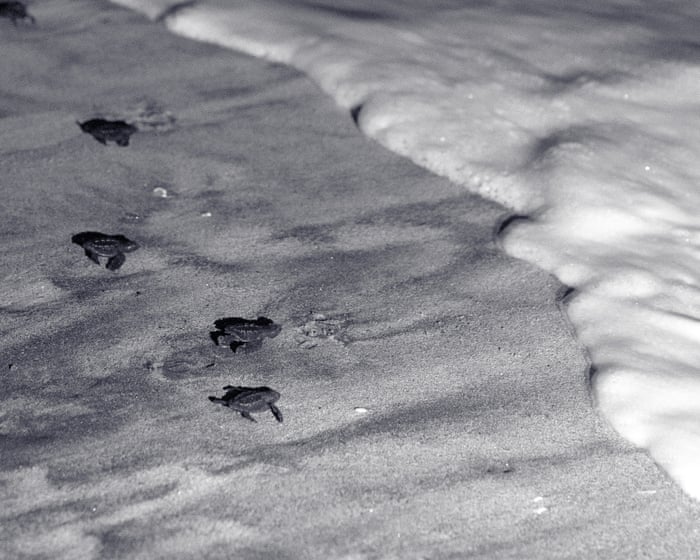
In California, on the US west coast, the first sea turtle hatchlings from nests ever recorded along that shoreline have emerged, and 75 olive ridley sea turtles have been released into the Pacific Ocean. The nests were found in September on two southern California beaches, a shift researchers link to this year's El Niño conditions. The finding could have long-term implications for the species and for local turtle management and protection.
How the hatching unfolded
The eggs were incubated at the Aquarium of the Pacific in Long Beach. On Saturday the aquarium announced that some of the eggs from Seal Beach had hatched after a 58-day incubation period, and the hatchlings were released in the dark early hours of the morning. On Sunday a second group, from the Huntington Beach nest, was released into the ocean. In total, 54 turtles were released from the Seal Beach nest and 21 from the Huntington Beach nest.
On 16 September, an olive ridley turtle was seen digging a nest and laying eggs at Seal Beach, the first recorded case of any sea turtle nesting on the west coast. Three days later, a second turtle was spotted nesting at Huntington Beach. The species is typically tropical, living in the Pacific, Indian and Atlantic oceans, and is known to nest at the southern tip of Baja California.
Possible reasons
The aquarium says it is not known why the turtles chose southern California beaches. Their behavior was probably influenced at least in part by the incoming El Niño, the recent tropical storm, range expansion or perhaps navigational mistakes; the species is also known for behavioral flexibility. In late September, as Hurricane Polo began to form, aquarium researchers and their federal and local partners moved the 204 eggs from the two nests into the aquarium's animal care facility.
Jeffrey Flocken, the aquarium's president and CEO, said the hatchlings will likely return one day to nest on the same beaches if they survive. Researchers continue to urge the public to watch for more nests. A third nest was recorded in Ventura County on 1 November, but its eggs were swept away by unusually high tides, likely also caused by El Niño.