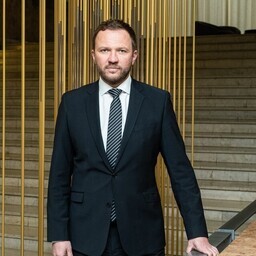
Canada’s Carney sees ‘timely’ role for G7 in any Iran deal
Canadian Prime Minister Mark Carney said the upcoming G7 summit could help cement a peace agreement with Iran, but stressed that any credible deal must include a ceasefire in Lebanon.

Canadian Prime Minister Mark Carney, speaking during a two-day visit to Ireland, said Saturday that the upcoming G7 summit in France could be well-timed to solidify a potential U.S.-Iran agreement. However, he emphasized that any credible deal must include a broader cessation of hostilities, particularly in Lebanon.
Standing alongside Irish Taoiseach Micheál Martin outside his central Dublin office, Carney said he was “encouraged by recent developments” regarding a possible U.S.-Iran deal. He welcomed France’s plan to expand the G7 summit by including leaders from Egypt, Saudi Arabia, Qatar and the United Arab Emirates, calling it “timely.” Carney noted the possibility of “a more durable ceasing of hostilities.”
Martin, whose government has been sharply critical of Israel, agreed that including Lebanon in the peace process is “extremely important” and that “Lebanese sovereignty is absolutely essential.” Lebanon holds particular significance for Ireland, a non-NATO member, because Irish troops serve in the UN peacekeeping force in southern Lebanon, where 48 Irish soldiers have died since 1978.
Carney’s visit to Ireland aims to strengthen Canadian-European cooperation as a counterbalance to tensions with the U.S. under the Trump administration. Ireland will take over the rotating presidency of the European Council on July 1, becoming a key ally. For Carney, a policy wonk and former central banker who has been an elected politician for just over a year, the trip also helps build his political brand – on Sunday he will visit his ancestral home in County Mayo, from which his grandparents emigrated to Canada in 1925.
Both Carney and Martin were careful not to criticize U.S. President Donald Trump directly during their joint press conference. Neither mentioned the U.S. or Trump in their opening remarks. When reporters pressed them on Trump’s role in international conflicts and his unreliability as a trade partner, both leaders avoided direct answers. Carney even acknowledged his answer was “very oblique.” Martin, whose country benefits from nearly 1,000 U.S. multinationals, softened his implicit criticism by saying: “President Trump is democratically elected as president of the United States and I’ll always respect that,” but cautioned that “we must always understand the limits of power.”