Anti-corruption bureau flags conflict of interest in votes for independent bodies' leaders, Constitutional Court objects
Latvia's anti-corruption bureau KNAB says candidates voting for their own election as heads of independent institutions creates a conflict of interest, having already fined NEPLP's leadership and now examining the Constitutional Court's leadership vote. The judiciary strongly rejects this interpretation.

Latvia's Corruption Prevention and Combating Bureau (KNAB) has identified a potential conflict of interest arising when candidates for leadership of independent state institutions vote for their own election, according to information gathered by the TV3 programme "Nekā personīga".
The law on preventing conflicts of interest in the activities of public officials prohibits an official from making decisions on matters in which they have a personal or financial stake. An exception applies to Saeima members, Cabinet ministers and municipal council members regarding their own pay or appointment, but independent institutions are not covered by this exception.
Fines for National Electronic Media Council leadership
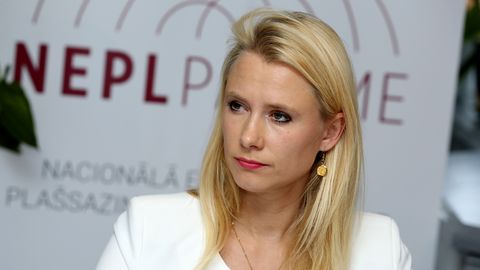
The National Electronic Media Council (NEPLP) has five members elected by the Saeima, who then choose a chair and deputy chair from among themselves. When previous chairman Ivars Āboliņš stepped down in early summer, votes on the new leadership split so narrowly that the decision would not have passed without the candidates voting for themselves. KNAB fined both resulting officeholders 500 euros each, arguing that by voting for themselves as chair, candidates simultaneously vote for their own higher salary, creating a material interest. The sanctioned officials disagree and have appealed, arguing the vote concerns duties rather than pay. NEPLP's current leadership has similarly relied on self-votes in past elections.
KNAB acknowledges exceptions for extreme cases, such as when an institution has too few members to elect a chair without a self-vote — as happened last year at the Public Electronic Media Council, which had only two members.
Constitutional Court under scrutiny too
KNAB has also opened administrative proceedings against the Constitutional Court's leadership over the election of its chairwoman and deputy two years ago, held by secret ballot. Court chairwoman Irēna Kucina called KNAB's assessment mistaken and absurd, warning it undermines the purpose of secret ballots and threatens judicial independence. Aigars Strupišs, head of the Supreme Court and the Judicial Council, pointed to a fundamental difference between a unilateral decision about oneself and a collegial body's joint decision made in fulfilling its statutory function.
Andris Donskis, head of KNAB's administrative investigations department, said the bureau sees no problem with its decisions and does not plan to change them. Justice Minister Edvards Smiltēns has submitted amendments to the conflict-of-interest law intended to clarify how officials may vote on their own institution's leadership.