Russia adopts state standard for "traditional Russian cuisine" covering 132 dishes, including "Little Russian" borscht and Chicken Kiev
Russia's federal standards agency Rosstandart has approved a state standard (GOST) with recipes and recommendations for 132 "traditional Russian cuisine" dishes. Compliance is voluntary, and the standard takes effect on January 1, 2027.
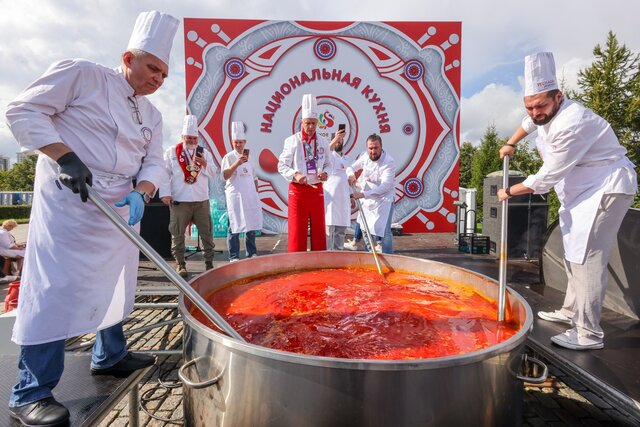
Rosstandart, Russia's federal standards agency, has approved a state standard (GOST) titled "Traditional Russian cuisine: Recommendations for preparing dishes." The document sets out recipes, preparation methods and serving suggestions for 132 dishes. The first edition will take effect on January 1, 2027, and officials plan to review and update it regularly.
A working group at the Industry and Trade Ministry developed the standard, with officials and restaurant industry representatives among its members. Industry and Trade Minister Anton Alikhanov said the document was not an attempt to regulate everything but a guide meant to give consumers authenticity and high quality. He said only 1% of the country's restaurants describe themselves as serving Russian cuisine, and the standard should reverse that trend.
Roskachestvo, Russia's quality watchdog, said the standard aims to catalog Russian dishes, their historical roots and the principles for using authentic ingredients. Igor Bukharov, president of the Federation of Restaurateurs and Hoteliers and a working group member, stressed that compliance is voluntary.
What the standard covers
The recipes include blini, vinegret salad, stuffed cabbage rolls, porridge, kolobok buns, Russian-style crayfish and more than 100 other dishes.
For okroshka, a cold soup, the authors recommend bread kvass with a pronounced sour taste. Cucumber or berry brine may be added, but kefir and other fermented dairy products are not recommended. The document lists versions with meat, with fish, and one suitable for religious fasts. It advises serving the dish cold, no warmer than 14 degrees Celsius (57 degrees Fahrenheit), and not preparing it in advance.
The list also features Olivier salad in two versions, a "historical" one and a modern one, and borscht, including a "regional" version called "Little Russian." Chicken Kiev carries a note saying the dish's name probably reflects an indirect association and does not indicate its place of origin.