Maize's effect on soil organic matter balance depends on how the crop is used
Polish farming portal Farmer explains that maize depletes soil differently depending on whether it is harvested for silage or for grain. Residues from grain maize can partly offset humus losses.
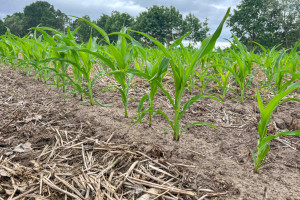
The Polish agricultural portal Farmer published an explainer on 24 October on how growing maize affects the balance of organic matter in soil. Maize is often named among crops blamed for soil degradation, but the article says its real impact depends less on the species itself than on how it is used, how crop residues are handled, crop rotation and the sources of organic matter on the farm.
The classic balance
In traditional organic matter balance calculations, maize is classed as a soil-depleting crop. The degradation coefficient is roughly 1.1–1.2 tonnes of organic matter per hectare, depending on the soil's agronomic category. This approach best describes a situation in which practically the whole above-ground part of the plant is removed from the field, which is why silage maize and grain maize must be viewed differently.
Silage
In silage production, a forage harvester takes almost all of the above-ground biomass off the field. Mainly the roots and a relatively small amount of stubble remain. For the soil, this means a large outflow of a potential source of organic carbon. If the practice is repeated year after year and the farm does not add manure, slurry, intermediate crops or other organic matter sources, the balance becomes increasingly hard to keep level.
Grain maize
Grain maize leaves a very large mass of crop residues in the field after harvest. Under reproduction coefficients used in Poland, 1 tonne of dry straw matter corresponds to about 0.21 tonnes of soil organic matter. Leaving enough maize residue can therefore largely offset the negative effect of the crop itself on the humus balance. This requires good shredding of the residues and conditions that allow the straw to decompose.
Monoculture and intensive tillage raise the risks to soil, while undersown crops, intermediate crops, manure and slurry can limit degradation.